AI Cybersecurity Trends 2026: Top 7 Must-Know Insights
Over 60% of enterprise security breaches in 2025 involved AI-generated attack vectors, and the threat landscape is only accelerating. Understanding AI cybersecurity trends 2026 is no longer optional for security professionals—it is a survival imperative. From agentic AI weaponized by threat actors to quantum-resistant cryptography reshaping data protection, the coming year demands a radical shift in how organizations defend their digital assets. Whether you lead a Security Operations Center (SOC) or manage cloud infrastructure, the convergence of artificial intelligence, Zero Trust frameworks, and quantum-safe technologies will define your security posture.
This guide breaks down the seven most critical insights you need to master before 2026. You will gain actionable intelligence on AI-powered defense mechanisms, Zero Trust adoption strategies for legacy systems, and the urgent push toward quantum-safe cryptography algorithms. Let’s start with the roadmap below.
Table of Contents
AI Cybersecurity Trends 2026: Offense and Defense
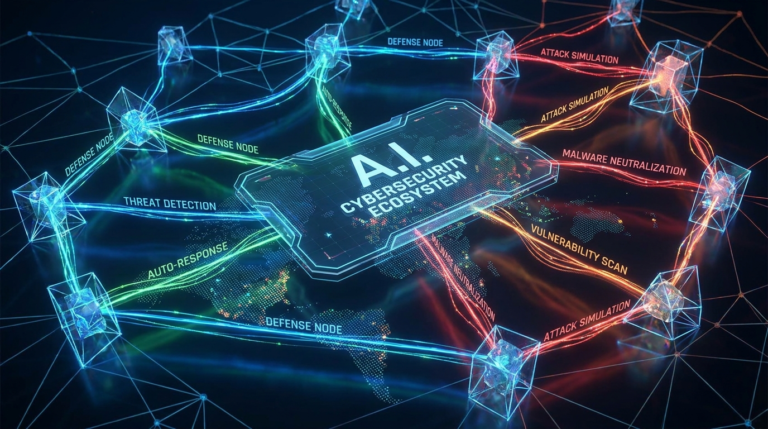
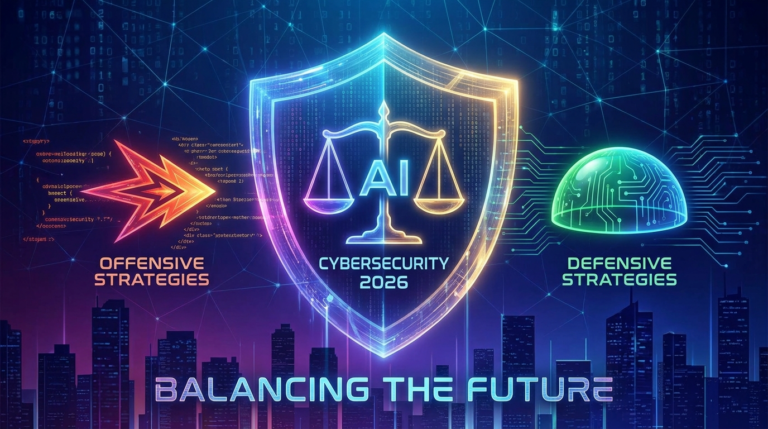
AI cybersecurity trends 2026 reveal a striking duality: the same artificial intelligence that defends enterprise networks is simultaneously being weaponized by cybercriminals. According to Forbes’ analysis of AI in cybersecurity, organizations that fail to adopt AI-driven defenses face exponentially higher breach costs. The battlefield has shifted from manual threat hunting to machine-speed combat where milliseconds determine outcomes.
Agentic AI—autonomous systems that execute multi-step tasks without human oversight—now represents both the greatest defensive asset and the most dangerous offensive tool in the cybersecurity arsenal. Understanding how these technologies operate on both sides of the equation is essential for every security leader planning their 2026 strategy.
AI-Powered SOC Operations and Threat Detection
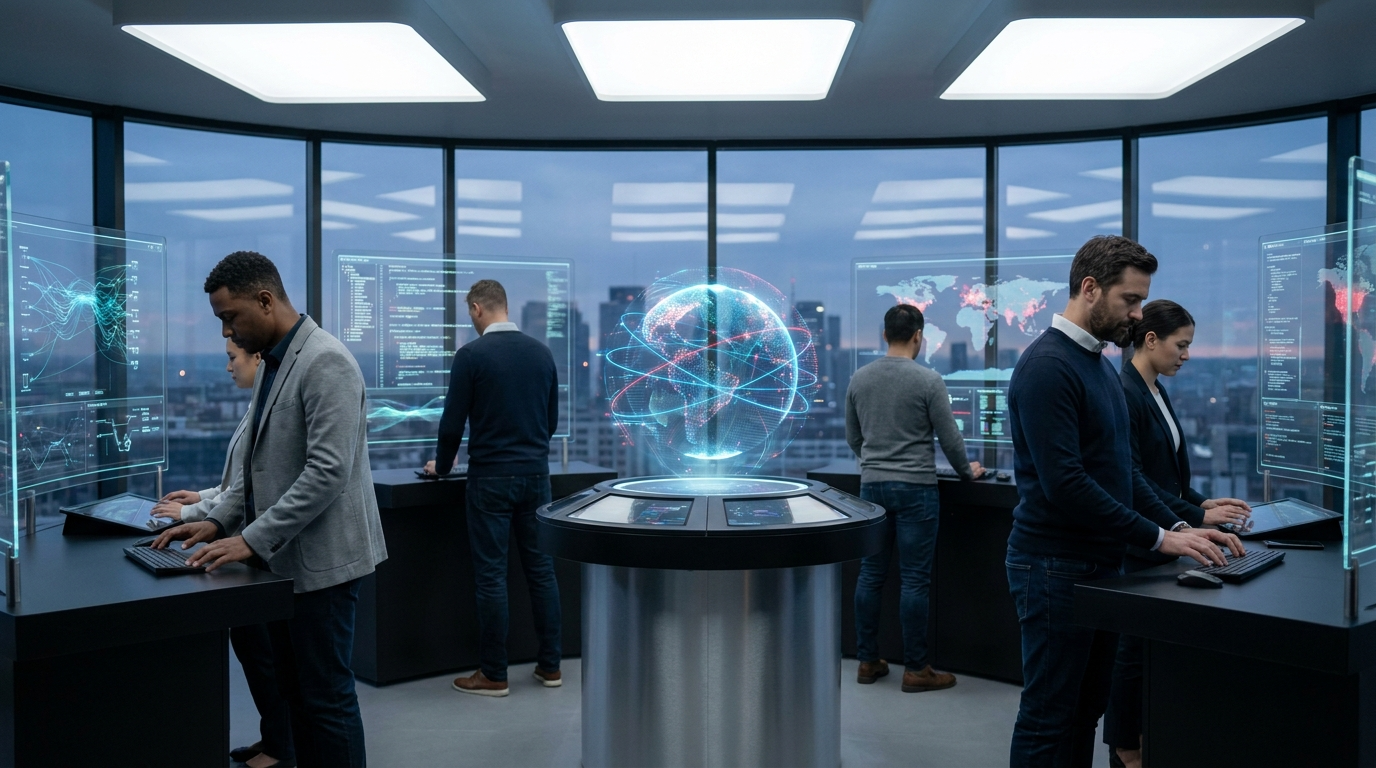
A Security Operations Center (SOC) is the centralized unit responsible for monitoring, detecting, and responding to cybersecurity incidents. By 2026, AI-powered SOC operations are transforming these centers from reactive monitoring hubs into predictive defense platforms. Machine learning models now correlate billions of log entries in real time, identifying anomalous behavior patterns that human analysts would miss entirely.
Consider how Microsoft’s enterprise SOC handled a sophisticated supply-chain attack in early 2025. Their AI system detected unusual API call patterns across 14 vendor integrations within 0.3 seconds. A human team would have needed approximately 18 hours to identify the same threat. The AI flagged the anomaly, isolated compromised endpoints, and initiated automated containment—all before the attacker could exfiltrate data.
Key capabilities of AI-powered SOC operations in 2026 include:
- Behavioral analytics — continuous monitoring of user and entity behavior to detect insider threats
- Automated incident response — AI-driven playbooks that execute containment within seconds
- Predictive threat intelligence — models trained on global threat feeds to anticipate attack vectors
- Alert fatigue reduction — intelligent triage that cuts false positives by up to 85%
- Natural language querying — analysts ask questions in plain English and receive correlated insights
The staffing crisis amplifies the urgency. The global cybersecurity workforce gap exceeded 4 million positions in 2025. AI does not replace analysts—it multiplies their effectiveness. A mid-sized financial firm in Singapore deployed an AI-augmented SOC in late 2025 and reduced mean time to detect (MTTD) from 72 hours to under 11 minutes.
However, deploying AI in SOC operations introduces its own risks. Model drift—when AI accuracy degrades over time due to evolving data patterns—requires continuous retraining. Organizations must also establish clear governance frameworks defining when AI can act autonomously versus when human approval is required. The balance between speed and oversight will define successful SOC strategies through 2026.
Generative AI Risks and Deepfake Attacks
Generative AI refers to systems that create new content—text, images, audio, or video—based on training data. While this technology powers legitimate innovation, it has also enabled a new generation of cyberattacks that are nearly indistinguishable from authentic communications. Deepfake attacks, which use AI to fabricate realistic audio or video of real people, have surged 340% between 2024 and 2025.
In one documented case, a Hong Kong finance employee transferred $25 million after a video call with what appeared to be the company’s CFO. The entire call was a real-time deepfake generated by attackers who had scraped publicly available footage. This incident illustrates why organizations adopting advanced technology solutions must integrate deepfake detection tools into their communication infrastructure.
The threat categories emerging from generative AI in 2026 are alarming:
| Threat Type | Attack Method | Detection Difficulty |
|---|---|---|
| Voice deepfakes | Cloned executive voices for vishing calls | High |
| AI-crafted phishing | Personalized emails with zero grammatical errors | Very High |
| Synthetic identity fraud | AI-generated identities for account creation | Moderate |
| Automated vulnerability scanning | AI bots probing systems at machine speed | Low |
| Polymorphic malware | AI-mutating code that evades signature detection | Very High |
Digital identity verification has become a frontline defense against these attacks. Multi-factor authentication (MFA) alone is no longer sufficient when attackers can replicate biometric data. MFA phishing defense—a technique where authentication challenges are cryptographically bound to specific devices and sessions—is emerging as a critical countermeasure.
Ransomware evolution further complicates the picture. Modern ransomware gangs use generative AI to craft tailored extortion messages, generate fake legal threats, and automate negotiation chatbots. A healthcare network in Germany discovered in 2025 that attackers had used AI to analyze their insurance policy documents—leaked in a prior breach—to calculate the exact ransom amount the insurer would approve.
Security teams must now assume that any digital communication could be AI-generated. Verification protocols should include out-of-band confirmation for financial transactions and executive requests. The era of implicit trust in digital communications is over.
Zero Trust and Quantum Security 2026 Strategies
The convergence of Zero Trust security 2026 frameworks and Quantum Security 2026 technologies represents the defensive backbone organizations need. AI cybersecurity trends 2026 cannot be addressed with perimeter-based defenses alone. The principle of “never trust, always verify” must extend from network architecture to cryptographic foundations.
Zero Trust architecture (ZTA) operates on the assumption that no user, device, or network segment should be inherently trusted. Every access request is verified continuously. When paired with quantum-resistant encryption, organizations build a defense-in-depth strategy capable of withstanding both current AI-driven threats and future quantum computing attacks.
Zero Trust Adoption Across Legacy Infrastructure
Zero Trust adoption urgency has reached a critical threshold. According to Star Knowledge’s analysis of Zero Trust in modern workplaces, over 72% of enterprises plan full Zero Trust implementation by the end of 2026. Yet the biggest obstacle is not technology—it is legacy infrastructure that was never designed for microsegmentation or continuous verification.
Legacy systems—older hardware and software still in production use—often lack APIs for modern identity providers. They run protocols that predate encrypted authentication. A major U.S. utility company attempted Zero Trust migration in 2025 and discovered that 38% of their operational technology (OT) devices could not support certificate-based authentication. Their solution involved deploying identity-aware proxy gateways that wrapped legacy communications in Zero Trust–compliant tunnels.
Practical steps for integrating Zero Trust with legacy systems include:
- Asset inventory audit — catalog every device, application, and data flow before segmentation
- Identity-aware proxies — broker authentication for systems that cannot natively support modern protocols
- Microsegmentation — isolate legacy environments into controlled zones with strict access policies
- Continuous cloud monitoring — deploy agents that track lateral movement across hybrid environments
- Phased rollout — prioritize high-risk segments first, then expand incrementally
The integration challenges are real but solvable. A European banking group successfully migrated 1,200 legacy applications to a Zero Trust framework over 14 months by using hybrid cloud Zero Trust architectures that maintained backward compatibility. Their key insight: Zero Trust is not an all-or-nothing deployment. Incremental adoption delivers measurable security improvements at each phase.
Cyber insurance evolution is also accelerating Zero Trust adoption. By 2026, many insurers require documented Zero Trust implementation as a precondition for coverage. Organizations without verified ZTA risk premium increases of 40–60% or outright policy denial. This financial pressure is converting reluctant executives into active sponsors of Zero Trust initiatives.
Quantum-Safe Cryptography Algorithms Explained
Quantum-safe cryptography—also called post-quantum cryptography (PQC)—refers to encryption algorithms designed to resist attacks from quantum computers. Unlike classical computers that process bits as 0 or 1, quantum computers use qubits that exist in multiple states simultaneously. This capability threatens to break RSA and elliptic-curve encryption, which protect virtually all internet communications today.
The National Institute of Standards and Technology (NIST) finalized its first set of post-quantum cryptographic standards in 2024. Three primary algorithms lead the transition:
| Algorithm | Type | Primary Use Case | Key Size |
|---|---|---|---|
| ML-KEM (CRYSTALS-Kyber) | Lattice-based | Key encapsulation / exchange | 800–1,568 bytes |
| ML-DSA (CRYSTALS-Dilithium) | Lattice-based | Digital signatures | 1,312–2,592 bytes |
| SLH-DSA (SPHINCS+) | Hash-based | Backup digital signatures | 32–64 bytes |
The “harvest now, decrypt later” threat makes immediate action critical. State-sponsored actors are already intercepting and storing encrypted communications. Once sufficiently powerful quantum computers become available—estimated between 2029 and 2035—those archived transmissions become readable. Organizations handling sensitive data with long confidentiality requirements must begin PQC migration now.
A practical example demonstrates the urgency. A defense contractor in 2025 began transitioning its classified communication channels to hybrid encryption—combining classical AES-256 with ML-KEM. This approach ensures that even if one layer is compromised, the other provides protection. Their phased migration covered satellite links first, followed by internal networks, and finally partner-facing systems.
Key challenges in quantum-safe migration include:
- Larger key sizes — PQC algorithms require significantly more bandwidth and storage
- Performance overhead — lattice-based operations are computationally heavier than current ECC
- Interoperability testing — ensuring PQC works across diverse vendor ecosystems
- Cryptographic agility — building systems that can swap algorithms without full redesigns
Cybersecurity skill-set evolution is essential for this transition. Security professionals must understand lattice mathematics, hash-based signature schemes, and hybrid deployment models. Organizations investing in specialized technology solutions should include PQC training in their 2026 workforce development plans. The quantum threat is not theoretical—it is a matter of timing.
Regulatory impacts are also shaping the timeline. The U.S. government mandated that all federal agencies begin PQC transition plans by 2025. The EU’s Cyber Resilience Act includes provisions for quantum-readiness assessments. By 2026, organizations that have not started PQC planning will face both regulatory penalties and competitive disadvantages.
Frequently Asked Questions
What are the most important AI cybersecurity trends 2026?
The most critical trends include AI-powered SOC automation, deepfake attack proliferation, Zero Trust adoption across hybrid environments, quantum-safe cryptography migration, ransomware evolution using generative AI, cyber insurance requirements tightening, and the growing cybersecurity workforce gap. Each trend demands proactive planning and investment from security leaders preparing for 2026.
How does Zero Trust security work with legacy systems?
Zero Trust integrates with legacy systems through identity-aware proxy gateways, microsegmentation, and phased rollouts. These proxies broker modern authentication for older devices that lack native support. Organizations typically prioritize high-risk segments first and expand incrementally, maintaining backward compatibility while enforcing continuous verification for every access request.
When will quantum computers break current encryption?
Most experts estimate cryptographically relevant quantum computers will emerge between 2029 and 2035. However, the “harvest now, decrypt later” strategy means attackers are already collecting encrypted data for future decryption. Organizations with long-term confidentiality needs—healthcare, defense, finance—should begin post-quantum cryptography migration immediately to protect archived data.
Can AI completely replace human cybersecurity analysts?
No. AI augments human analysts by automating repetitive tasks, reducing alert fatigue, and accelerating threat detection. However, strategic decision-making, ethical judgment, and novel threat analysis still require human expertise. The most effective security operations in 2026 combine AI speed with human contextual reasoning in a collaborative model.
What is the biggest challenge in adopting Zero Trust by 2026?
Legacy infrastructure compatibility remains the largest barrier. Many organizations operate older systems that cannot support modern authentication protocols or microsegmentation. Budget constraints, organizational resistance to change, and the shortage of skilled security professionals further complicate adoption. A phased approach with executive sponsorship dramatically improves success rates.
How do deepfake attacks impact enterprise security?
Deepfake attacks exploit synthetic audio and video to impersonate executives, authorize fraudulent transactions, and bypass identity verification. They have caused documented losses exceeding $25 million in single incidents. Enterprises must deploy deepfake detection tools, enforce out-of-band verification for sensitive requests, and train employees to recognize AI-generated communications.
Conclusion
The seven insights covered in this guide reveal that AI cybersecurity trends 2026 demand immediate, strategic action across three converging fronts: AI-driven defense and offense, Zero Trust architecture adoption, and quantum-safe cryptography migration. Organizations that treat these as distant concerns rather than present priorities will find themselves outpaced by adversaries who are already leveraging these technologies.
The window for preparation is narrowing. Start by auditing your current security posture against the frameworks and threats outlined here. Invest in AI-augmented SOC capabilities, begin phased Zero Trust deployment—even across legacy systems—and initiate post-quantum cryptography planning today. Share this article with your security team, and explore how evolving technology policies shape digital security for a broader perspective on the forces driving change. The organizations that act now will define the security standards of tomorrow.