Agentic AI Cybersecurity 2026: Top Trends to Watch
By 2026, over 60% of enterprise cyberattacks are expected to involve autonomous AI agents operating without human oversight. Agentic AI cybersecurity 2026 represents the most significant shift in digital defense since the adoption of cloud computing, and organizations unprepared for this evolution face devastating consequences. The threat landscape is no longer dominated by human hackers alone; self-learning AI systems now launch, adapt, and escalate attacks in real time. Meanwhile, defenders are deploying the same autonomous technology to fight back.
This article breaks down the top cybersecurity trends shaping 2026, from agentic AI driven attack and defense ecosystems to quantum-ready security innovations. You will gain actionable insights into zero trust architectures, post-quantum cryptography, and the regulatory shifts redefining compliance. Whether you lead a security team or manage enterprise risk, the following sections equip you with what matters most right now.
Table of Contents
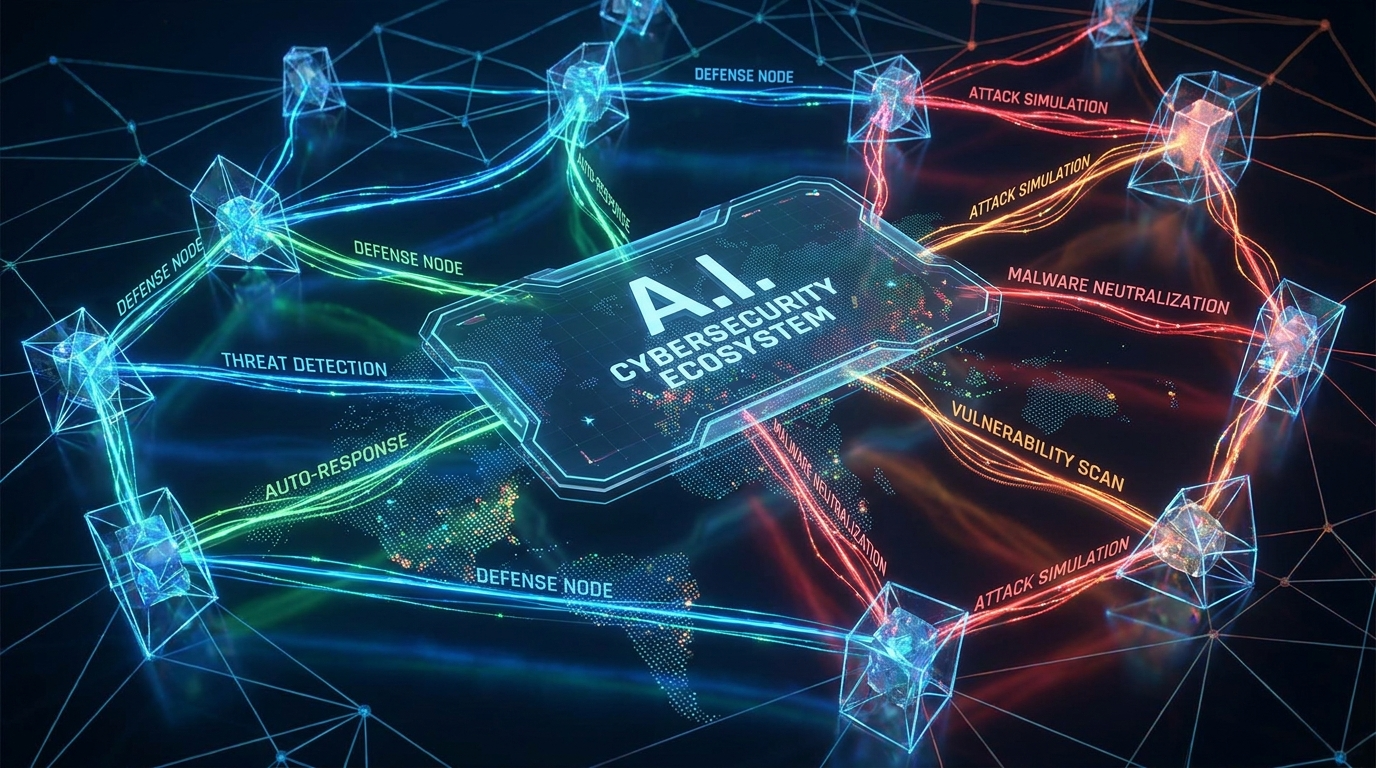
Agentic AI Cybersecurity 2026: Attack and Defense Ecosystems
Agentic AI cybersecurity 2026 marks the year when autonomous AI systems become both the primary weapon and the frontline shield in digital warfare. Unlike traditional automation, agentic AI refers to artificial intelligence that can independently set goals, make decisions, and execute multi-step tasks without waiting for human commands. This capability transforms how attacks unfold and how organizations must respond.
The cybersecurity industry has witnessed a rapid evolution. In 2024, AI-assisted phishing emails became nearly indistinguishable from legitimate messages. By 2025, adversarial AI began probing network defenses autonomously. Now, in 2026, fully agentic systems orchestrate entire attack chains, from initial reconnaissance to data exfiltration, in minutes rather than days. According to EC-Council University’s 2026 cybersecurity trends report, agentic AI is reshaping every layer of the cybersecurity stack.
How Agentic AI Powers Autonomous Cyberattacks
Agentic AI driven attack ecosystems operate on a disturbing principle: the attacker only needs to define a target. The AI agent handles everything else. These systems use reinforcement learning, a training method where the AI improves by receiving rewards for successful outcomes, to adapt their strategies mid-attack.
Here is how a typical agentic AI attack chain unfolds in 2026:
- Reconnaissance: The AI agent scans public-facing assets, social media profiles, and dark web databases to build a detailed target profile.
- Weaponization: It crafts custom payloads, which are malicious code designed to exploit specific vulnerabilities, tailored to the target’s software stack.
- Delivery and exploitation: The agent selects the optimal attack vector, whether phishing, supply chain compromise, or zero-day exploitation.
- Lateral movement: Once inside, the AI autonomously navigates the network, escalating privileges and avoiding detection systems.
- Exfiltration: Data is extracted through encrypted channels that mimic normal traffic patterns.
A real-world example emerged in early 2026, when a European financial services firm reported an attack where an AI agent breached its perimeter, identified high-value databases, and began exfiltration within 11 minutes. Human analysts only detected the breach after the AI had already adapted its traffic patterns twice to evade their SIEM (Security Information and Event Management) system.
On the defense side, enterprises are deploying their own agentic AI systems. These defensive agents monitor network traffic continuously, correlate threat intelligence from multiple feeds, and autonomously isolate compromised endpoints. The key advantage is speed. Where a human SOC (Security Operations Center) analyst might take 45 minutes to triage an alert, a defensive AI agent completes the same process in under 10 seconds.
Organizations investing in platforms like SaaS cybersecurity tools trending in 2026 gain particular advantages because cloud-native defense agents scale instantly across distributed environments.
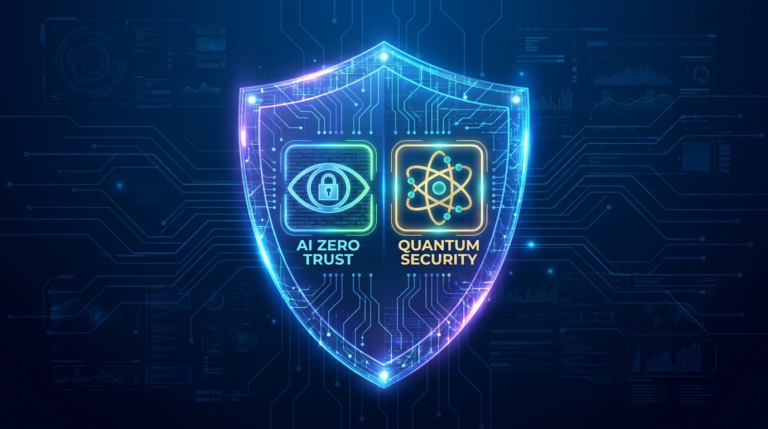
Zero Trust Architectures With Continuous Authentication
Zero trust security is not new, but 2026 introduces a critical evolution: continuous authentication powered by agentic AI. Traditional zero trust operates on the principle of “never trust, always verify.” Every user and device must prove their identity before accessing resources. However, verification historically happened at discrete checkpoints, such as login or session initiation.
In 2026, zero trust architectures with continuous authentication 2026 eliminate those gaps. Agentic AI monitors user behavior throughout every session, analyzing keystroke dynamics, mouse movement patterns, access timing, and even cognitive patterns in decision-making sequences.
Consider this comparison of traditional versus AI-enhanced zero trust:
| Feature | Traditional Zero Trust | AI-Enhanced Zero Trust 2026 |
|---|---|---|
| Authentication frequency | At login and session start | Continuous, every action evaluated |
| Behavioral analysis | Rule-based, static thresholds | Adaptive, ML-driven anomaly detection |
| Response time to compromise | Minutes to hours | Sub-second automated containment |
| Insider threat detection | Limited to access logs | Real-time behavioral deviation alerts |
| Scalability | Requires manual policy updates | Self-adjusting policies via AI agents |
A practical example comes from a healthcare network in the United States that implemented AI-enhanced zero trust in Q1 2026. Within three months, the system flagged a compromised physician credential being used at unusual hours with atypical access patterns. The agentic AI revoked access, isolated the session, and alerted the SOC, all within 0.8 seconds. According to PCE Systems’ analysis of zero trust cybersecurity in 2026, continuous authentication reduces breach dwell time by up to 94%.
The integration of agentic AI into zero trust frameworks means that security is no longer a gate you pass through. It becomes an invisible, omnipresent guardian evaluating every digital interaction in real time.
Quantum-Ready Security Innovations in 2026
While agentic AI cybersecurity 2026 dominates the immediate threat landscape, quantum computing poses an existential risk to every encryption standard currently protecting global data. Quantum-ready security, defined as cryptographic systems designed to withstand attacks from quantum computers, has moved from theoretical research to urgent enterprise priority.
The core concern is straightforward. RSA and ECC (Elliptic Curve Cryptography), the encryption algorithms securing most internet communications, can be broken by a sufficiently powerful quantum computer running Shor’s algorithm. While no such computer exists at production scale today, the “harvest now, decrypt later” strategy means adversaries are already collecting encrypted data they plan to crack once quantum hardware matures.
Post-Quantum Cryptography and Enterprise Adoption
Post-quantum cryptography (PQC) refers to new cryptographic algorithms specifically designed to resist both classical and quantum computing attacks. In 2024, NIST (National Institute of Standards and Technology) finalized its first set of PQC standards, including CRYSTALS-Kyber for key encapsulation and CRYSTALS-Dilithium for digital signatures.
By 2026, enterprise adoption of these standards has accelerated significantly. Here are the key drivers:
- Regulatory mandates: The U.S. federal government now requires PQC for all sensitive communications by Q4 2026.
- Insurance requirements: Cyber insurance providers increasingly demand evidence of quantum-ready security postures.
- Supply chain pressure: Major cloud providers like AWS and Azure now offer PQC-enabled TLS (Transport Layer Security) connections by default.
- Client demand: Financial institutions and healthcare organizations require PQC compliance from all third-party vendors.
A concrete example involves a multinational bank that completed its PQC migration in March 2026. The bank replaced its RSA-2048 encryption with CRYSTALS-Kyber across all internal communications and customer-facing APIs. The migration took 14 months and required retraining 200 engineers. Performance benchmarks showed only a 3% increase in computational overhead, far less than the 15–20% many experts had predicted.
However, adoption challenges remain significant. Legacy systems running outdated protocols cannot simply swap algorithms. Many organizations discover that their cryptographic inventory, a complete list of where and how encryption is used, does not even exist. Building this inventory is now the critical first step in any quantum-ready security and post-quantum cryptography innovations 2026 roadmap.
Emerging technologies complement PQC adoption. Homomorphic encryption, which allows computation on encrypted data without decrypting it first, is gaining traction in sectors handling sensitive health and financial records. Similarly, blockchain-based identity verification is being piloted to create tamper-proof authentication chains resistant to both AI-generated deepfakes and future quantum attacks. As reported by The Quantum Insider, 2026 has become the definitive year of quantum security action.
Compliance and Risk Management in the AI-Quantum Era
The convergence of agentic AI and quantum computing creates unprecedented compliance challenges. Regulatory bodies worldwide are scrambling to update frameworks that were never designed for autonomous AI agents or quantum-capable adversaries.
Key regulatory developments in 2026 include:
- EU AI Act enforcement: Fully active since August 2025, it now classifies autonomous cybersecurity AI agents as high-risk systems requiring human oversight documentation.
- Updated NIST Cybersecurity Framework (CSF 2.1): Adds quantum risk assessment as a mandatory category.
- SEC cyber disclosure rules: Publicly traded companies must now report AI-related security incidents within 48 hours.
- GDPR quantum addendum: European regulators are drafting requirements for quantum-resistant encryption of personal data by 2028, with compliance planning mandated starting 2026.
Risk management strategies must evolve in parallel. Traditional risk matrices that evaluate threats on static probability scales fail when adversaries are autonomous AI systems that learn and adapt. Forward-thinking CISOs (Chief Information Security Officers) are adopting dynamic risk scoring models where agentic AI continuously reassesses organizational exposure based on real-time threat intelligence.
A practical case involves a retail conglomerate that implemented dynamic risk scoring in Q2 2026. The system, powered by defensive AI agents, identified that a newly disclosed vulnerability in their point-of-sale software coincided with increased dark web chatter targeting their industry. The risk score for that asset jumped from “moderate” to “critical” within hours, triggering automatic patch deployment across 4,000 locations before any exploit attempt materialized.
Ethical considerations also demand attention. When an AI agent autonomously decides to isolate a network segment, it may disrupt patient care in a hospital or halt transactions at a financial institution. Organizations must establish clear governance policies defining the boundaries of autonomous AI decision-making. Understanding how platforms handle automated enforcement decisions offers useful parallels for designing AI governance in cybersecurity contexts.
The organizations that thrive in this new landscape will be those treating compliance not as a checkbox exercise but as a living, AI-informed process. Agentic AI cybersecurity 2026 demands that risk management becomes as autonomous and adaptive as the threats it confronts.
Frequently Asked Questions
What is agentic AI in cybersecurity?
Agentic AI refers to artificial intelligence systems that autonomously set goals, make decisions, and execute complex tasks without human intervention. In cybersecurity, these agents independently detect threats, investigate incidents, and respond to attacks in real time. Unlike traditional AI that follows pre-set rules, agentic AI adapts its strategies based on evolving conditions, making it both a powerful defensive tool and a dangerous offensive weapon.
How does agentic AI cybersecurity 2026 differ from previous years?
In 2026, agentic AI has matured from experimental prototypes to fully deployed production systems on both the attack and defense sides. Attackers now use autonomous agents to execute entire breach campaigns in minutes. Defenders counter with their own AI agents providing continuous monitoring and sub-second incident response. Previous years relied more heavily on human-in-the-loop AI, where humans made final decisions. This year marks the shift to autonomous operations.
Why is zero trust architecture critical in 2026?
Zero trust has become essential because traditional perimeter-based security cannot stop agentic AI attacks that move laterally across networks at machine speed. In 2026, zero trust architectures incorporate continuous authentication powered by AI, verifying user identity throughout every session rather than only at login. This approach reduces breach dwell time by up to 94% and provides real-time detection of compromised credentials and insider threats.
What is post-quantum cryptography and why does it matter now?
Post-quantum cryptography consists of encryption algorithms designed to resist attacks from quantum computers. It matters now because adversaries are already harvesting encrypted data they plan to decrypt once quantum hardware becomes powerful enough. NIST finalized PQC standards in 2024, and by 2026, regulatory mandates and cyber insurance requirements are driving rapid enterprise adoption. Delaying migration increases exposure to future quantum-enabled data breaches.
How should organizations prepare for quantum computing threats?
Organizations should start by conducting a cryptographic inventory to identify every system using vulnerable encryption. Next, they should prioritize migration to NIST-approved post-quantum algorithms like CRYSTALS-Kyber and CRYSTALS-Dilithium. Engaging cloud providers offering PQC-enabled connections reduces migration complexity. Finally, building internal expertise through engineer training ensures long-term readiness for ongoing cryptographic transitions.
What compliance changes affect cybersecurity teams in 2026?
Major regulatory updates include full EU AI Act enforcement classifying autonomous cybersecurity AI as high-risk, NIST CSF 2.1 adding quantum risk assessment requirements, and SEC rules mandating 48-hour disclosure of AI-related security incidents. European regulators are also drafting quantum-resistant encryption mandates. Cybersecurity teams must integrate these evolving requirements into their governance frameworks and update risk assessment processes accordingly.
Can small businesses afford agentic AI cybersecurity solutions?
Yes, the SaaS model has made agentic AI cybersecurity accessible to small businesses. Cloud-based security platforms now offer AI-driven threat detection, automated incident response, and continuous monitoring as subscription services. Costs typically range from a few hundred to a few thousand dollars monthly, depending on the number of endpoints. Managed security service providers also bundle agentic AI capabilities into affordable packages tailored for smaller organizations.
Conclusion
The cybersecurity landscape of 2026 is defined by three converging forces: autonomous AI agents transforming both attack and defense operations, zero trust architectures evolving with continuous authentication, and quantum-ready security moving from theory to mandatory practice. Agentic AI cybersecurity 2026 is not a future prediction. It is the present reality demanding immediate action from every organization handling digital assets.
The gap between prepared and unprepared organizations will widen dramatically over the next 12 months. Those who invest now in AI-enhanced defenses, post-quantum cryptography migration, and dynamic risk management will lead their industries. Those who delay face compounding vulnerabilities that autonomous adversaries will exploit without hesitation.
Take your next step today. Share this article with your security team, audit your current cryptographic inventory, and explore how emerging software solutions are transforming specialized industries for practical inspiration. The future of cybersecurity belongs to those who act before the threat arrives.