Mental Health AI: The Ultimate Digital Frontier Transforming Care in 2026
Mental health AI is no longer a futuristic concept — it is reshaping how millions of people access psychological support right now. In 2026, AI-powered tools are detecting depression through 30-second voice samples, delivering cognitive behavioral therapy through chatbots available 24/7, and flagging crisis signals up to seven days before a human clinician would notice them. The global burden of mental health disorders affects roughly 970 million people worldwide, yet fewer than five mental health professionals are available per 100,000 people globally. That gap is enormous — and AI is stepping in to fill it.
The momentum is hard to ignore. The AI-powered mental health solutions market has climbed to approximately $2.42 billion in 2026 and is projected to surpass $9.96 billion by 2031. These are not abstract numbers. Behind every data point is a person who could not afford therapy, could not find a therapist, or was too ashamed to ask for help. AI is changing that equation in ways that felt impossible just five years ago.
How mental health AI Works: From Voice to Diagnosis
The science behind mental health AI is more sophisticated than most people realize. It is not simply a chatbot asking “how are you feeling today?” Modern systems analyze dozens of invisible signals — the rhythm of your speech, the micro-expressions that flash across your face in a fraction of a second, the way your typing cadence slows when anxiety rises. Each of these is a data stream. Together, they form a diagnostic portrait that is increasingly accurate.
Voice Biomarkers: Detecting Depression in Seconds
Companies like Sonde Health and Kintsugi have built FDA-cleared platforms that analyze vocal characteristics — pitch, intensity, rhythm, prosody, and subtle variations called jitter and shimmer — to detect signs of depression from a 30-second voice sample. The clinical validation for these tools shows 75 to 85% accuracy in detecting major depression. That is not perfect, but it is clinically meaningful, especially for populations with no access to a psychiatrist.
A voice biomarker tool can now flag moderate-to-severe depression within 25 seconds at 71.3% sensitivity. During a routine telehealth call, the system runs silently in the background. If it detects risk, the platform alerts the care team. No extra appointment. No waiting list. Just a quiet signal that someone needs attention.
“AI systems are capable of continuously observing behavior and interpreting complex emotional patterns, offering more immediate and nuanced insights than traditional screening methods.” — PMC Umbrella Review, 2026

Facial Emotion Recognition and Behavioral Analytics
Beyond voice, computer vision systems now analyze micro-expressions — involuntary facial movements lasting as little as one twenty-fifth of a second — to assess emotional states in real time. Research shows that combining facial, audio, and text features can push diagnostic precision beyond 90% for mood and anxiety disorders. Platforms like Aiberry have run clinical trials on exactly this multimodal approach across hundreds of participants aged 13 to 79.
Wearable integration is pushing this further still. Sensors in smartwatches and rings detect physiological stress markers, and when combined with AI-driven chat coaching, emotion-recognition accuracy in some systems reaches 99.3%. More strikingly, multimodal emotional AI embedded in wearables can detect a mental health crisis up to 7.2 days before a human clinician would recognize it. That kind of early warning changes outcomes fundamentally.
AI Therapy Chatbots: CBT at Your Fingertips
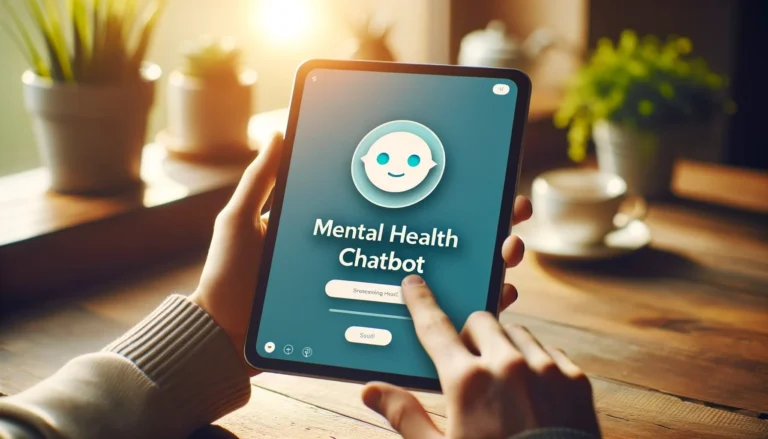
The chatbot landscape has shifted dramatically. Early rule-based systems dominated until 2023. Since then, large language model-based chatbots have surged to 45% of new clinical studies, according to a 2026 systematic review of 160 studies covering the field. Platforms like Wysa, Woebot, and the newer Ash — launched by Slingshot AI in July 2025 and trained on CBT, DBT, ACT, and psychodynamic frameworks — are delivering measurable results.
A Dartmouth clinical trial of the generative AI therapy chatbot Therabot reported that participants diagnosed with depression experienced a 51% average reduction in symptoms. Those are outcomes that rival, in some cases, what human therapy achieves for mild to moderate cases. And 24% of U.S. adults are already turning to large language models for emotional support — a demographic shift that happened quietly, without clinical guidance, driven by pure demand. Learn more about the evidence base at the National Institute of Mental Health’s digital health resources.
The Regulation Battle and Ethical Challenges Ahead
The technology is moving faster than the regulatory frameworks designed to govern it. That gap is not just a policy problem — it is a patient safety problem. When a product markets itself as “AI-powered therapy” but runs on simple rule-based scripts, the gap between expectation and reality can be genuinely harmful. The industry is at an inflection point, and how 2026 resolves these tensions will define the next decade of digital mental health.
FDA’s Slow but Significant Stance
The FDA has authorized more than 1,200 AI-based digital devices for marketing. As of early 2026, not a single one has been cleared specifically for mental health treatment. The FDA’s Digital Health Advisory Committee convened in November 2025 to examine the regulatory pathway for generative AI in mental health devices — chatbots, diagnostic tools, virtual companions. The committee found real promise but raised serious concerns about suicidal ideation monitoring, content safety, and the risk of AI “confabulation” in clinical contexts.
The FDA is now developing Pre-Determined Change Control Plans, which would let developers update their AI models without triggering a full re-review, provided they stay within defined safety guardrails. For a rapidly evolving field, this approach could be the difference between innovation and regulatory paralysis. But it only works if the guardrails are genuinely iron-clad — and that remains an open question. The American Psychological Association provides guidance on digital mental health tools at their digital health resource center.
Privacy, Bias, and the Biometric Data Problem
When your app knows you are experiencing elevated anxiety before you do, who owns that information? That is not a hypothetical. It is the central legal battle of mental health AI in 2026. The proposed “Genetic and Biometric Privacy Act” would restrict insurers and employers from using wearable diagnostic data to penalize individuals. Multiple U.S. states introduced AI chatbot regulation in 2026, with particular focus on children and teenagers — a demographic especially vulnerable to the influence of AI companions.
Bias is the other critical failure mode. AI models trained on non-representative data produce results that work well for the majority and fail quietly for everyone else. If a depression-detection model was trained predominantly on English-speaking, Western populations, its 80% accuracy rate may hide near-random performance for Arabic speakers, for older adults, or for people whose speech patterns diverge from the training set. Regulatory frameworks are only beginning to demand demographic transparency from developers.
Will mental health AI Replace Therapists?
The short answer is no — and the long answer is more interesting. Mental health AI is genuinely effective at the top of the care funnel: screening, early detection, psychoeducation, and managing mild-to-moderate symptoms between therapy sessions. It is not equipped to handle complex trauma, severe psychiatric conditions, or the relational depth that makes therapy transformative. The FDA advisory committee was explicit: human clinical oversight is not optional, it is essential.
What AI can do is extend the reach of every therapist. When an AI handles symptom tracking, crisis monitoring, and between-session support, the clinician can focus on the work that requires a human. Employers are already documenting 12% productivity gains and 67% retention improvements after deploying AI-driven mental wellness tools. The integration model — AI augmenting human care rather than replacing it — is the direction the most credible platforms are pursuing.
Frequently Asked Questions
What is mental health AI and how does it work?
Mental health AI refers to artificial intelligence systems designed to detect, monitor, and support psychological well-being. These tools use machine learning, natural language processing, voice biomarker analysis, and facial emotion recognition to identify signs of depression, anxiety, and other conditions. They operate through smartphone apps, wearables, and telehealth platforms, analyzing behavioral and physiological signals to deliver early alerts or therapeutic support.
Can an AI chatbot really replace traditional therapy?
Not entirely, and the leading voices in the field are clear about this. AI chatbots like Woebot and Wysa are effective for mild-to-moderate symptoms, psychoeducation, and between-session support. Clinical trials like the Dartmouth Therabot study show meaningful symptom reduction. However, for complex conditions, trauma, or severe psychiatric episodes, human therapists remain essential. The best outcomes come from integrating both approaches.
Is mental health AI regulated by the FDA?
As of 2026, the FDA has not yet cleared any generative AI-based device specifically for mental health treatment, despite authorizing over 1,200 AI digital health devices in other areas. The FDA’s Digital Health Advisory Committee is actively developing regulatory frameworks, including Pre-Determined Change Control Plans, to govern how these tools can be updated and deployed safely. Regulation is coming — it is just moving slower than the technology.
How accurate is voice biomarker AI at detecting depression?
Current platforms achieve 75 to 85% clinical accuracy in detecting major depression from short voice samples. Some multimodal systems combining voice, facial expression, and text analysis exceed 90% accuracy for mood and anxiety disorders. While promising, these tools are meant to assist and flag — not to replace formal clinical diagnosis. They are most valuable when integrated into existing telehealth workflows as an additional layer of screening.
What are the biggest risks of mental health AI?
The primary risks include AI “confabulation” — generating inaccurate or harmful responses — biometric data privacy concerns, algorithmic bias against underrepresented populations, and the risk of over-reliance on AI at the expense of human clinical oversight. Regulatory gaps remain significant, and some apps market themselves as AI-powered therapy while running on basic rule-based scripts. Users should look for clinically validated platforms with transparent methodology and active human oversight.
Conclusion
Mental health AI stands at one of the most consequential crossroads in modern medicine. The tools are real, the evidence is accumulating, and the need has never been more urgent. Nearly a billion people live with a mental health condition, and the global system of care cannot meet that demand with clinicians alone.
Voice biomarkers, multimodal diagnostic AI, and therapy chatbots are not science fiction — they are deployed, tested, and improving. The regulation is catching up, the privacy frameworks are being built, and the ethical questions are finally being asked in the right rooms. What matters now is who leads this space: developers who prioritize clinical validation and human oversight, or those who chase market share with unproven tools.
The opportunity is extraordinary. So is the responsibility. If you work in healthcare, policy, or technology, 2026 is the year to engage seriously with mental health AI — not because the technology is perfect, but because the people it could help cannot afford to wait.