
DevSecOps: 5 Powerful Ways to Build Security Into Every Line of Code
In 2026, building software without security baked in from the start is like constructing a skyscraper and deciding to add foundations at the end. DevSecOps — the practice of integrating security directly into every phase of software development — has shifted from a best practice to an absolute necessity. With the global DevSecOps market surging past $10 billion this year and cybercrime costs projected to hit $10.5 trillion annually, the question is no longer whether your team should adopt DevSecOps, but how fast you can do it.
Why DevSecOps Is Redefining Software Development in 2026
There was a time when security was the last team to touch a piece of software. Developers wrote the code, operations deployed it, and somewhere at the finish line, a security team would audit the whole thing and send back a list of problems to fix. It was slow, expensive, and dangerously ineffective. DevSecOps dismantled that model entirely.
The True Cost of Bolting Security On at the End
Every developer who has ever received a security report three weeks before a launch deadline knows the sinking feeling it brings. Research consistently shows that fixing a vulnerability during the design phase costs a fraction of what it takes to patch it in production — anywhere from 6x to 30x more expensive when addressed late in the cycle. It is not just about money. Late-stage security fixes introduce delays, erode team morale, and create the kind of frantic last-minute patches that open new attack surfaces. The traditional model was never efficient. It was just the only model people knew.
Today, 78% of enterprises have integrated DevSecOps practices into at least one development team, and 92% of adopters report improved security posture as a direct result. Perhaps more telling: organizations using DevSecOps deploy software 208% more frequently than teams that do not, while simultaneously seeing 65% fewer security incidents in production. Speed and security, it turns out, are not opposites.
Shift Left: The Philosophy That Changes Everything
The term “shift left” refers to moving security checks earlier in the development timeline — to the left on the project pipeline. Rather than treating security as a final gate, DevSecOps makes it a continuous companion at every stage: planning, coding, building, testing, and deployment. When Cloudflare adopted this approach, they described it as a “survival mechanism,” embedding security audits and policy compliance directly into their software development lifecycle. The result was consistent security across hundreds of internal production accounts with dramatically less human error. That is the promise of DevSecOps: not just safer code, but a fundamentally smarter way of building it.
What makes shift-left genuinely powerful is what it does to developer behavior. IDE plugins flag insecure code patterns the moment a developer writes them. Pre-commit hooks block secrets and credentials from ever entering a repository. Threat modeling happens at the architecture stage, not after the product already exists. Security stops being something that happens to developers and starts being something developers do — naturally, continuously, as part of their normal workflow.
Market Growth That Proves the Point
Numbers rarely lie about where an industry is heading. The global DevSecOps market is valued at approximately $10.88 billion in 2026, growing at a compound annual rate of 22.1% and forecast to reach $29.52 billion by 2031. North America leads adoption with roughly 36% of global market share, driven in large part by federal mandates like Executive Order 14028, which requires Software Bills of Materials from government suppliers. Europe’s NIS2 directive is applying similar pressure across approximately 350,000 entities in critical sectors. Asia-Pacific, meanwhile, is the fastest-growing region, with a 22.4% CAGR driven by accelerating digitization and tightening cybersecurity regulations in markets like India and China.
These numbers reflect something beyond market enthusiasm. They reflect urgency. With 97% of commercial codebases containing open-source components and 81% of those carrying at least one high- or critical-risk vulnerability, the DevSecOps imperative is not theoretical — it is operational reality for every team shipping software at speed.
“Security is no longer a gate at the end of development. In 2026, it is the thread woven through every commit, every build, and every deployment. DevSecOps is not a methodology — it is the new minimum standard.”
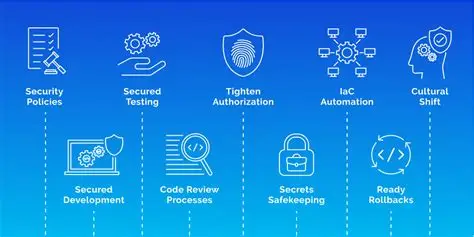
5 Powerful Ways to Implement DevSecOps Effectively
Understanding the value of DevSecOps is one thing. Putting it into practice inside a real engineering team — with deadlines, competing priorities, and varying levels of security expertise — is another. Here are five concrete strategies that leading teams are using in 2026 to make DevSecOps work at scale.
Automate Security Inside Your CI/CD Pipeline
Automation is the backbone of DevSecOps, and the CI/CD pipeline is where it does its most important work. Static Application Security Testing (SAST) tools scan code for vulnerabilities before it is ever compiled. Dynamic Application Security Testing (DAST) tools test running applications for exploitable flaws. Software Composition Analysis (SCA) checks every open-source dependency — because 80% of those dependencies go unpatched for over a year. Modern tools like Snyk, Semgrep, and Trivy have made these scans fast enough to run on every commit without slowing delivery. When a vulnerable dependency is detected, platforms like Snyk can even auto-generate a pull request to fix it — no human bottleneck required. Teams that have implemented this kind of automated gating report a 73% reduction in critical vulnerabilities reaching production.
Embrace AI-Powered Vulnerability Detection
Manual security reviews cannot scale to the pace of modern development. A team pushing code dozens of times per day needs security analysis that keeps up — and increasingly, that means AI. In 2026, AI-powered tools are doing far more than flagging known vulnerability patterns. They analyze behavioral anomalies across vast codebases, prioritize exploitable risks over theoretical ones, and predict attack vectors before they become incidents. Snyk, for example, surpassed $300 million in annual recurring revenue in part because its machine-learning engine focuses engineers on the vulnerabilities that actually matter, rather than flooding them with noise. According to GitLab, 84% of developers already use or plan to use AI tools in their daily workflows — and in DevSecOps, that adoption is translating directly into faster remediation and fewer production incidents.
Build a Security-First Culture Across All Teams
Culture is consistently cited as one of the biggest barriers to DevSecOps success. Around 51% of organizations report cultural resistance as a major obstacle, and 45% cite a lack of security skills within development teams. The answer is not to turn every developer into a security engineer — it is to distribute security knowledge in ways that fit how developers already work. Role-specific training tied to real findings from the team’s own codebase is far more effective than generic security courses. Security acceptance criteria written into tickets before development begins eliminates the “security is someone else’s problem” mindset. When security teams attend sprint planning and developers attend threat modeling sessions, silos dissolve and shared accountability takes root. Organizations that invest in this cultural shift see an average return on investment of 300% within two years of DevSecOps adoption.
Implement Infrastructure as Code Security Scanning
As cloud-native architectures become the default, the attack surface has shifted. Misconfigurations in Terraform templates, exposed Kubernetes manifests, and insecure Docker files now represent some of the most common entry points for attackers. Infrastructure as Code (IaC) security scanning addresses this directly. Tools like Checkov scan Terraform and CloudFormation configurations against over 1,000 built-in policies covering CIS benchmarks, catching issues like publicly accessible S3 buckets, unencrypted databases, and overly permissive IAM roles before a single cloud resource is provisioned. In 2026, this practice has moved from optional to essential: cloud-native applications now account for 48% of the entire DevSecOps market by development environment, making IaC security one of the fastest-growing areas within the discipline.
Track the Right Metrics to Continuously Improve
DevSecOps is not a destination — it is a continuous improvement loop. Teams that treat it as a one-time implementation miss the point entirely. Effective DevSecOps programs track metrics like vulnerability density per release, mean time to remediation, gated change rate by environment, and the percentage of releases with complete security evidence. These numbers reveal where the pipeline is strong and where it leaks. When Slack optimized their end-to-end pipeline using continuous measurement, they cut build times in half — and the security benefits came as part of the same optimization. Regular engineering metrics create the feedback loop that turns a good DevSecOps implementation into an excellent one over time.
“Fixing a security vulnerability during the design phase costs up to 30 times less than patching it after deployment. DevSecOps does not just protect software — it protects budgets, timelines, and reputations.”
Frequently Asked Questions about DevSecOps
What is DevSecOps and how is it different from DevOps?
DevSecOps stands for Development, Security, and Operations. It extends the traditional DevOps model by integrating security practices at every phase of the software development lifecycle — from planning and coding through deployment and monitoring. While DevOps focuses on speed and collaboration between development and operations teams, DevSecOps adds security as a shared, continuous responsibility. The key difference is that security is never a final gate or an afterthought; it is woven into the daily work of every team member from day one.
Why is DevSecOps important in 2026?
The pace of software development has accelerated dramatically. Teams now deploy code dozens or hundreds of times per day, and traditional security reviews cannot keep up with that cadence. At the same time, cyber threats are more sophisticated than ever, with 81% of commercial codebases carrying at least one high-risk open-source vulnerability. Regulatory pressure — from the US Executive Order 14028 to Europe’s NIS2 directive — is also pushing organizations to demonstrate continuous security controls. DevSecOps provides the automation, culture, and tooling to meet all of these demands simultaneously without sacrificing delivery speed.
What does “shift left” mean in the context of DevSecOps?
Shifting left means moving security testing and analysis earlier in the development process — to the “left” side of the project timeline. Instead of performing security audits after the software is built, shift-left security embeds vulnerability scanning, threat modeling, and secure coding practices at the planning, coding, and building stages. This approach is significantly more cost-effective: addressing a flaw during design can cost up to 30 times less than fixing the same issue after production deployment. Shift-left security is one of the foundational principles of DevSecOps.
What are the main tools used in a DevSecOps pipeline?
A modern DevSecOps pipeline typically includes Static Application Security Testing (SAST) tools like Semgrep or Checkmarx to scan code before compilation, Dynamic Application Security Testing (DAST) tools that test live applications, Software Composition Analysis (SCA) tools like Snyk to audit open-source dependencies, and Infrastructure as Code scanners like Checkov for cloud configurations. Secrets detection tools like GitLeaks prevent credentials from entering repositories, while container security tools like Trivy scan Docker images. The most effective pipelines combine multiple layers of these tools to provide comprehensive, automated coverage at every stage of delivery.
How does DevSecOps affect development speed?
Contrary to a common misconception, DevSecOps tends to accelerate delivery rather than slow it down. By catching vulnerabilities early — before they require major rework — it eliminates the costly bottlenecks that late-stage security reviews create. Teams adopting DevSecOps report deploying software 208% more frequently than teams that do not, with a change failure rate cut in half. Automated security scans run in the background without interrupting developer workflows, and AI-powered tools reduce alert fatigue by prioritizing the issues that actually matter. The result is faster, safer, and more predictable delivery.
Conclusion
DevSecOps is not a trend that organizations can afford to observe from a distance. In 2026, with a global market exceeding $10 billion and growing at over 22% annually, it represents the new baseline for how serious software teams operate. The evidence is consistent and compelling: organizations that embed security into every line of code see fewer incidents, faster delivery, lower remediation costs, and stronger regulatory compliance. The shift left philosophy — treating security as a companion to development rather than a checkpoint after it — is the practical engine that makes this possible. Whether your team is just beginning to explore DevSecOps or looking to strengthen an existing program, the five strategies outlined here — pipeline automation, AI-powered detection, cultural investment, IaC scanning, and continuous measurement — provide a clear path forward. Start with one. Build from there. The best time to secure your code was at the first commit. The second best time is now.