App Store Boom 2026: How AI Is Driving a 60% Surge in App Launches
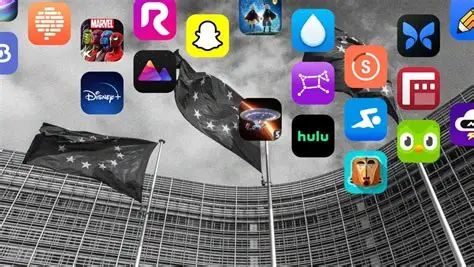
What if the technology everyone said would kill apps is actually the reason they are multiplying faster than ever? That is exactly what the data is showing in 2026. According to market intelligence firm Appfigures, reported by TechCrunch, worldwide app releases in the first quarter of 2026 surged 60% year-over-year across both the Apple App Store and Google Play. On iOS alone, the figure climbed even higher — 80%. And in April 2026, the numbers crossed an astonishing threshold: total app releases are up 104% compared to the same period last year. The app store boom 2026 is not a prediction. It is already happening. And artificial intelligence is at the center of it all.
1. The Numbers Behind the App Store Boom 2026
For years, the dominant narrative in tech circles was that AI assistants, chatbots, and agents would gradually replace the need for standalone apps. Nothing CEO Carl Pei was among the industry voices publicly betting against apps. Apple’s own SVP of Worldwide Marketing, Greg Joswiak, addressed this directly, noting that rumors of the App Store’s death in the AI age may have been greatly exaggerated. The data proves him right. Q1 2026 saw 60% more app releases globally than the same period in 2025. The iOS App Store recorded even steeper growth at 80%, and April’s early figures pushed total cross-platform releases past 100% year-over-year growth.
What is particularly telling is the shift in which categories are growing. Mobile games have historically dominated new releases. In 2026, productivity apps entered the top five categories for the first time. Utilities climbed to the number two slot. Lifestyle apps rose from fifth to third. Health and fitness rounded out the top five. Statista projects that Google Play will reach 143 billion app downloads by the end of 2026. The global mobile app market is expected to exceed $935 billion in value this year.
2. The Engine: Vibe Coding and AI App Builders
So what is driving the app store boom 2026? The working hypothesis is the rise of vibe coding. The term was coined in early 2025 by Andrej Karpathy, the former head of AI at Tesla and OpenAI co-founder, who described a new way of building software where developers fully give in to the vibes and let AI handle the implementation details from plain English descriptions. By 2026, vibe coding is no longer a novelty. The vibe coding market reached $4.7 billion in 2026, with 63% of users being non-developers. Collins Dictionary named vibe coding its Word of the Year in 2025, and MIT Technology Review included it in its 10 Breakthrough Technologies of 2026 list.
The tools driving this transformation fall into two broad categories. The first is AI app builders — platforms like Lovable, Bolt.new, and Replit that generate complete, deployable applications from a written description alone. Lovable surpassed $300 million in annual recurring revenue and closed a $330 million Series B at a $6.6 billion valuation. Replit grew from $10 million to $100 million ARR in just nine months. The second category is AI coding assistants like Cursor and Claude Code, designed for developers. Cursor reached $2 billion in annualized revenue. Across the broader developer community, 92% of US developers now use AI coding tools daily, and 41% of all code written globally is AI-generated.
The real-world impact is measurable. Y Combinator Winter 2025 cohort: 25% of startups had 95% AI-generated codebases. Walmart saved 4 million developer hours. Non-developer Sabrine Matos built Plinq using Lovable, reaching 10,000 users in three months and $456,000 in annual recurring revenue.
3. The Risks: Quality, Security, and Platform Oversight
The app store boom 2026 is not without significant challenges. When the barrier to build drops this dramatically, the barrier to publish low-quality or malicious software drops with it. In February 2026, Google issued a direct warning: AI-generated apps that fail to meet quality, safety, or UX standards face rejection or removal from the Play Store. In its 2025 safety report, Google disclosed it had prevented 1.75 million policy-violating apps and banned more than 80,000 developer accounts. Apple briefly removed Cal AI from the App Store for deceptive billing practices, signaling it would apply its rules regardless of a developer’s size.
Security researchers have documented a concerning pattern. Analysis of vibe coding tools in 2026 notes that 45% of AI-generated code contains security vulnerabilities. CodeRabbit’s analysis found that AI co-authored code showed between 1.7 and 2.74 times more major security issues than human-written code. GitClear data shows refactoring volume has dropped 60% since 2021 while code duplication has quadrupled. There is also a quality ceiling: once a vibe-coded project exceeds 15 to 20 components, the AI context window degrades, leading to the informally labeled vibe coding hangover.
4. What This Means for the Future of App Development
The app store boom 2026 is reshaping not just how apps are built, but who builds them. The US Bureau of Labor Statistics projects software engineering job growth of 17% through 2033, adding approximately 327,900 new positions. But the nature of those roles is fundamentally evolving. The developer of 2026 is less a code writer and more an AI orchestrator — someone who translates business requirements into system architecture, directs AI tools effectively, and validates AI-generated output. The emerging profile is the product engineer: someone who understands both business impact and system design.
The competitive dynamics are shifting at the platform level. The Epic Games v. Google ruling forced Google to allow third-party app stores and give them access to its full catalogue. For businesses, the global mobile app market crossing $935 billion in 2026 is not a ceiling — it is a floor. Quality, security, and user trust are becoming the primary differentiators in a market where launching an app is now something anyone can do over a weekend.
Conclusion
The app store boom 2026 has inverted one of tech’s most confident predictions. Rather than killing apps, AI has democratized their creation, enabling a wave of new builders — entrepreneurs, marketers, educators, and first-time founders — to participate in the app economy. With global releases up 60% in Q1 and more than doubling in April, the data speaks for itself. The developers and businesses who will thrive in this new era are those who combine the speed advantages of AI tools with the judgment, architectural thinking, and quality focus that only thoughtful human oversight can provide. In 2026, anyone can build an app. The question is whether they can build one worth keeping.