AI infrastructure: 7 Critical Truths Behind a Massive Boom
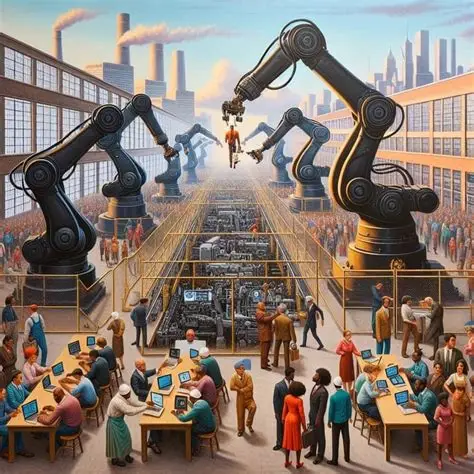
AI infrastructure has quietly become the biggest story in technology, bigger even than the chatbots that started the craze. The race is no longer about who builds the smartest model. It is about who can secure the chips, the electricity, the water, and the data centers to run it. In barely two years, AI infrastructure has turned the industry into something that looks less like software and more like heavy industry, with price tags to match.
The numbers behind this shift are almost hard to believe, and they carry consequences that reach far past Silicon Valley, all the way to your monthly power bill.

Why AI infrastructure became the whole game
For years the AI conversation was about algorithms, parameters, and clever demos. That era is over. The frontier has moved to the physical world, where AI infrastructure means concrete, copper, transformers, and gigawatts. Whoever controls that layer increasingly controls where the profits of the AI era will land, which is why the largest companies on earth are spending like wartime governments.
From algorithms to power plants
Artificial intelligence has outgrown its software phase and triggered the largest physical computing buildout in modern history. Training and running today’s models demands enormous, always-on power, so the people building AI infrastructure now think like utility planners. They chase land near substations, negotiate directly with power producers, and worry about cooling water. A single leading AI supercomputer, xAI’s Colossus, saw its power draw rise from 13 megawatts in 2019 to roughly 280 megawatts in 2025, more than twenty times in six years. That curve, repeated across the industry, is what turned compute into an energy problem.
The energy numbers are staggering
The scale is hard to overstate. The International Energy Agency reports global data center electricity demand rising from about 415 terawatt-hours in 2024 toward roughly 945 by 2030, with AI-focused facilities surging 50 percent in 2025 alone. Put differently, the world’s data centers now consume about as much electricity as all of France. The strain is intensely local too: data centers already account for more than 20 percent of Ireland’s national electricity and around a quarter of Virginia’s. This is the part of AI infrastructure that ordinary residents feel first, through tighter grids and rising rates.
A capital race without precedent
The money matches the megawatts. The capital spending of the five largest technology companies passed 400 billion dollars in 2025 and is set to climb another 75 percent in 2026, pushing combined AI infrastructure budgets toward 725 billion dollars in a single year. These firms now pour 45 to 57 percent of their revenue into capital projects, up from 10 to 15 percent in 2020, and the sector is expected to issue around 1.5 trillion dollars of new debt through 2027. Even cash-rich giants are borrowing to keep pace, a sign of how existential the buildout has become.
The ripple reaches the public grid directly. Across the United States, 51 utilities have launched roughly 1.4 trillion dollars of grid upgrades to handle the new load. Analysts at the Brookings Institution note that if the world’s data centers were treated as a single country, they would already rank among the top five electricity consumers on earth, sitting between Japan and Russia. Microsoft alone plans to spend roughly 190 billion dollars on capacity in 2026, a figure larger than the annual budgets of many national governments.
The AI race stopped being a software contest and became a contest over electricity, land, and balance sheets. The winners may simply be whoever can build fastest.
The bottlenecks and the scramble for power
All that capital still runs into a stubborn physical wall. You can order chips, but you cannot order a power grid overnight, and that gap is now the defining tension of the entire AI infrastructure boom. The result is a frantic, creative, and sometimes risky scramble to secure energy.
Power is the new bottleneck
Grid connection has become the hardest thing to buy. According to real estate analysts at JLL, average wait times to connect a large data center in primary markets now exceed four years, pushing operators toward on-site generation and battery storage. The market is splitting in two. Projects with secured power move ahead at breakneck speed, while a large share of announced capacity stalls in interconnection queues. To escape the wait, hyperscalers are turning themselves into energy developers, a role no software company ever expected to play. You can follow more of this shift in our ongoing technology coverage.
The sheer volume of planned construction explains the urgency. JLL projects nearly 100 gigawatts of new data center capacity between 2026 and 2030, effectively doubling the world’s total. Yet a capex announcement is not the same as a finished facility, because a model provider can buy chips but cannot instantly buy a substation, a qualified construction crew, or a community willing to host concentrated load. That mismatch between ambition and physical reality is the quiet drama running underneath every AI infrastructure headline.
The nuclear and gas gamble
To find round-the-clock clean power, the giants have turned to nuclear energy. Microsoft signed a long deal to restart a reactor at Three Mile Island, Amazon and Meta locked in their own nuclear supply, and Google backed small modular reactors from Kairos Power. The pipeline of reactor off-take agreements tied to data centers ballooned from 25 gigawatts at the end of 2024 to 45 gigawatts by mid-2026. The catch is timing: small modular reactors remain years from commercial operation, so natural gas is quietly filling the gap as a bridge, complicating the industry’s climate promises even as AI infrastructure keeps expanding.
The question hanging over it all
For all the momentum, one doubt refuses to fade. Is this spending generating enough revenue to justify it? Analysts at Bain estimate that sustaining the current pace requires roughly 2 trillion dollars of annual revenue that does not yet exist, fueling talk of a bubble. There is a fairness problem too, since regulators worry that ordinary households could end up subsidizing the grid upgrades that data centers demand. How those two questions resolve will decide whether the AI infrastructure boom looks visionary or reckless in hindsight.
The fairness debate is already moving from think tanks into statehouses. Several regulators are drafting rules to ring-fence data center costs so that residential customers are not quietly billed for power lines built to serve a hyperscaler. At the same time, the concentration of demand in a few corridors, from Northern Virginia to Phoenix, means a handful of communities shoulder most of the strain. Public consent, in other words, is becoming as scarce and valuable an input to AI infrastructure as the silicon itself.
Compute can be bought in an afternoon. A substation, a reactor, and a community’s consent cannot, and that is where the real race is now being run.
Frequently Asked Questions
What is AI infrastructure?
AI infrastructure is the physical and computing foundation that trains and runs artificial intelligence, including data centers, GPUs and AI chips, networking, cooling systems, water, and the electricity that powers them. As models have grown, this hardware-and-energy layer has become the most capital-intensive and strategically important part of the entire AI industry.
How much energy does AI infrastructure really use?
A lot, and it is rising fast. The IEA estimates global data centers used around 415 terawatt-hours in 2024, close to the entire electricity consumption of France, with demand projected to roughly double by 2030. AI-focused facilities are the fastest-growing slice, which is why power has become the main limit on how quickly AI infrastructure can expand.
Is the AI infrastructure boom a bubble?
It is hotly debated. Demand for compute is genuinely real, but the spending is enormous, and analysts note that the revenue needed to justify it does not yet exist at the required scale. If AI adoption keeps accelerating, the buildout may prove smart; if it slows, some of today’s commitments could look badly overextended.
Conclusion
AI infrastructure has become the foundation that everything else in technology now rests on, and the stakes reach well beyond the companies writing the checks. Global data-center power use is on track to double by 2030, water and grid pressures are mounting, and the trillions being committed will shape energy policy, electricity prices, and the climate for years. The smartest takeaway is that the AI era will be decided less by clever models and more by who can build and power the machines behind them. Keep an eye on this race, and on the energy debate that comes with it, because it touches far more than the tech industry. For deeper context, browse our latest technology analysis.