Medical digital twins: 7 Ways They Are Transforming Care
Medical digital twins are quietly rewriting how doctors plan treatment. The idea sounds like science fiction: build a living virtual copy of a patient’s heart or lungs, then test a drug or rehearse an operation on the copy before anyone touches the real person. Yet hospitals and drugmakers are already doing exactly this, and the field is growing at a pace few technologies ever reach.
The promise is simple and powerful. If you can predict how a body will respond before you act, you make medicine safer, faster, and far more personal.
Medical digital twins and how they work
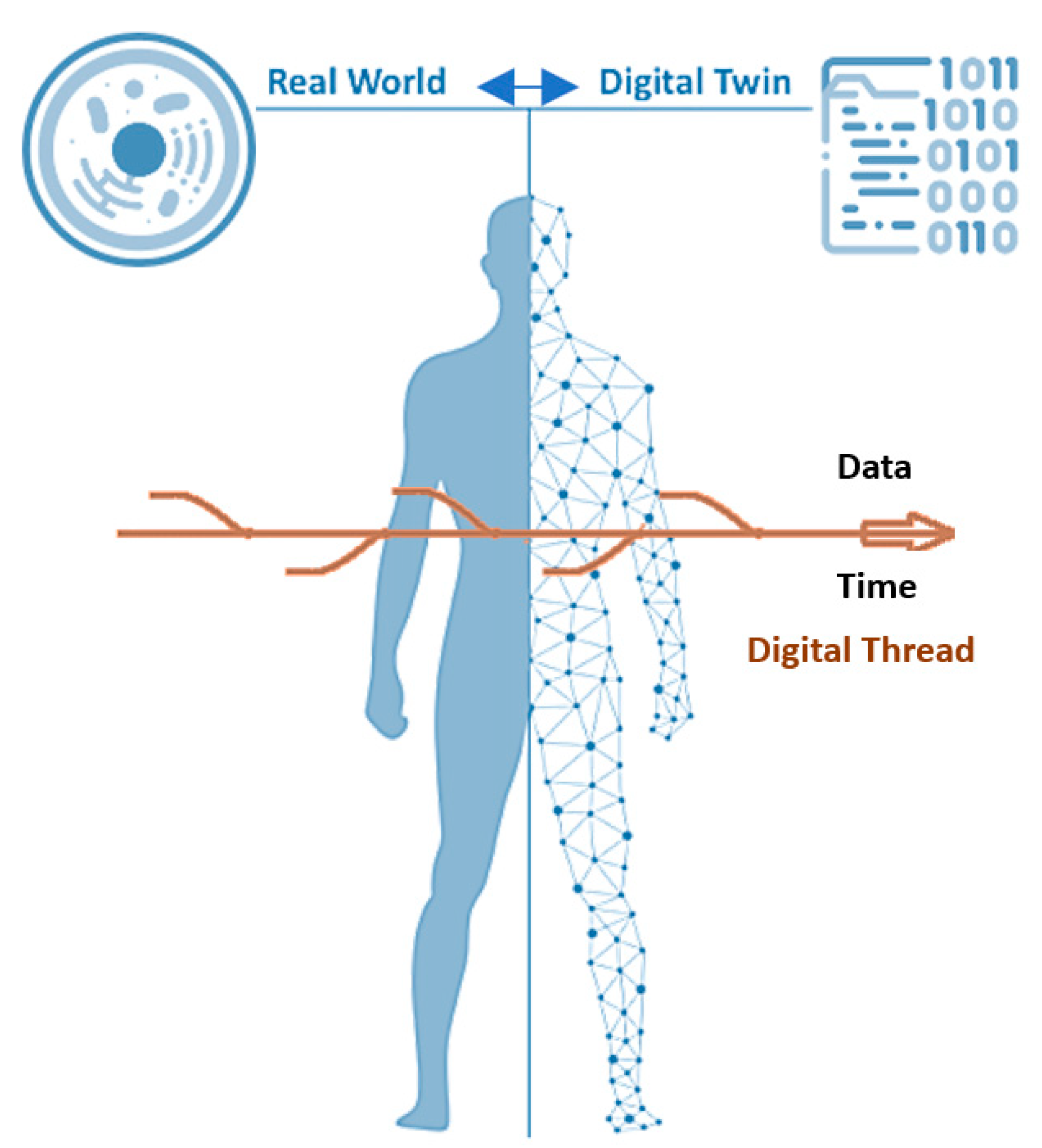
A digital twin is a virtual model that mirrors a real thing closely enough to predict its behavior. In medicine, that real thing is you, or more often a single organ. Feed the model your scans, your sensor data, and the physics of living tissue, and it can simulate how your body might react to a treatment without any risk to you.
From Apollo to the operating room
The concept is older than it looks. Engineer Michael Grieves introduced the digital twin idea in the early 2000s, but its roots reach back to NASA, which built simulations of spacecraft during the Apollo program so engineers on Earth could diagnose problems without endangering astronauts. The same logic eventually reached aerospace, cars, and factories before medicine caught up. The turning point for healthcare came in 2014, when a coalition of doctors, engineers, and regulators launched the Living Heart Project and produced the first lifelike virtual replica of a human heart.
How a virtual organ is built
Building one starts with data, and lots of it. Imaging scans supply the anatomy, while wearable sensors, lab results, and implant telemetry supply the live signals that keep the model current. A twin only stays useful if it keeps learning from the patient, which is why the explosion of connected medical devices matters so much. The installed base of medical IoT devices passed 7.8 billion units in 2025, feeding a constant stream of physiological data. That flow is what turns a static 3D picture into a “living” model that updates as your real condition changes.
Where they already save lives
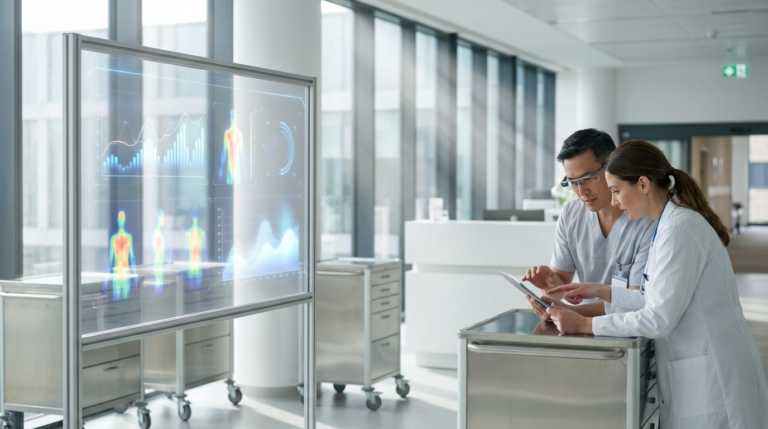
This is no longer theoretical. Surgeons can now rehearse a heart valve replacement on a digital replica of a patient’s heart, predicting how the body will respond before the first incision. One FDA-cleared tool from inHEART automatically turns CT scans into 3D cardiac models and has cut certain heart-rhythm procedure times by up to 60 percent while reducing recurrence of the arrhythmia by 38 percent. Across published studies, patient-specific surgical-planning twins have lowered intraoperative complications by roughly 22 percent. The momentum reaches well beyond a single vendor. In the United Kingdom, the NHS and Imperial College London have piloted personalized heart twins that draw on imaging and wearable data to predict how a patient’s disease will progress, and Siemens Healthineers has partnered with the Mayo Clinic to build AI-enhanced cardiovascular twins that flag complications before they happen. You can read more about the flagship cardiac work through Dassault Systèmes, whose Living Heart now anchors much of the field.
The promise is not a robot doctor. It is a rehearsal room, where the riskiest decisions can be tested on a copy before they reach the patient.
Why the technology is scaling fast
Clinical wins explain the excitement, but money and regulation explain the speed. The twin is turning into core infrastructure for drug development and device design, and the numbers behind that shift are striking.
Faster, cheaper, safer drug trials
Drug development is brutally slow and expensive, with an average cost above 2.6 billion dollars and failure rates near 90 percent. Digital twins offer a way to test candidates against thousands of virtual patients before a single human is enrolled, a practice known as an in-silico trial. Industry analysis suggests this approach can shorten the development cycle from about 12 years to under 7 and cut late-stage failure rates by roughly a third, according to research summarized by the National Institutes of Health library. The market has noticed. One forecast puts the healthcare digital twin sector at 7.47 billion dollars in 2026, climbing toward 101 billion by 2031, though estimates vary widely. The approach is not limited to labs and surgeries either. Startups like Twin Health build metabolic twins that help people with type 2 diabetes manage their condition and, in some studies, reduce medication. In one in-silico imaging study, nearly 3,000 synthetic virtual patients produced results that closely matched a real 400-patient trial, a sign of how seriously the method is being taken.
Regulators open the door
None of this scales without regulators on board, and they are warming up. The U.S. Food and Drug Administration has encouraged computational modeling through its Modernization Act framework and issued draft guidance supporting digital twin simulations in device submissions. Its multi-year ENRICHMENT collaboration with Dassault produced the first playbook for in-silico clinical trials, and the Living Heart model alone has already supported more than 200 FDA submissions. That regulatory credibility is what lets virtual evidence stand beside animal and human data rather than replacing it outright. Europe is moving too: Dassault’s Living Brain platform earned EU medical-device certification as the first comprehensive neurovascular simulation twin approved for clinical use, opening the door to its use in neurosurgical planning across the region.
The hurdles still ahead
The picture is not all smooth. Building and validating these models is expensive, and stitching together messy data from scans, wearables, and records is genuinely hard, which keeps the technology out of reach for smaller clinics. A virtual copy of a person also raises real privacy and security questions, since that replica is some of the most sensitive data imaginable and would be a tempting target for attackers. And the dream of a complete whole-body twin remains exactly that, a dream, for now, with most progress still confined to single organs.
A twin is only as trustworthy as the data feeding it. Garbage in still means garbage out, even when the output looks like a perfect copy of you.
Frequently Asked Questions
What is a medical digital twin?
Medical digital twins are virtual replicas of a patient, an organ, or a biological system, built from imaging, sensor, and clinical data. They let doctors and researchers simulate how a real body might respond to a drug, device, or surgery, so risky decisions can be tested safely on the copy before they reach the actual person.
Are these virtual twins accurate enough to trust?
They are accurate enough to support decisions, not to make them alone. Validated models like the Living Heart have backed hundreds of FDA submissions, but regulators treat twin results as evidence that sits alongside animal and human data, not a replacement. Accuracy also depends entirely on the quality of the data feeding the model.
Will a digital twin ever replace real medical tests?
Not entirely, at least not soon. The realistic near-term role is reducing how many physical tests and trials are needed, shortening drug development and helping surgeons plan. A full whole-body twin that could replace real testing does not yet exist, and physician oversight remains essential at every step.
Conclusion
Medical digital twins have moved from impossible dream to working tool in barely a decade, and the momentum is only building. Projects are already underway to model the liver, lungs, and brain, with a complete virtual human as the long-term goal. The technology will not replace doctors or real trials, but it is fast becoming the rehearsal space where safer, more personal medicine gets worked out first. If you follow healthcare innovation, this is the trend to watch, because the next time you face a major procedure, a virtual version of you may have already been through it. Keep an eye on how your own care providers adopt it.