AI-powered wearables health monitoring: 7 Breakthroughs Redefining Care in 2026
The era of passive fitness trackers is firmly behind us. In 2026, AI-powered wearables health monitoring has evolved into something far more profound — a continuous, clinical-grade intelligence layer that wraps around the human body 24 hours a day. From smart rings that predict illness before symptoms appear to ECG-capable watches that catch silent cardiac arrhythmias, these devices are no longer gadgets; they are frontline diagnostic partners. With the global wearable AI market valued at approximately $61.5 billion in 2026 and projected to surpass $310 billion by 2033, the shift from reactive treatment to proactive, data-driven prevention is accelerating at a pace that is reshaping medicine as we know it.
How AI-Powered Wearables Health Monitoring Is Transforming Disease Detection
The defining shift in 2026 is not the hardware — it is the software intelligence embedded within it. Modern wearables have graduated from counting steps to running sophisticated machine learning models directly on the device itself. These models compare your current readings not against a generalized population average, but against your own historical baseline. That personalization is what separates today’s devices from everything that came before. According to Grand View Research, the healthcare segment is anticipated to register the fastest growth in the wearable AI market from 2026 to 2033, driven precisely by this ability to deliver continuous, actionable clinical insight outside traditional care settings.
Edge AI: Clinical Intelligence Running on Your Wrist
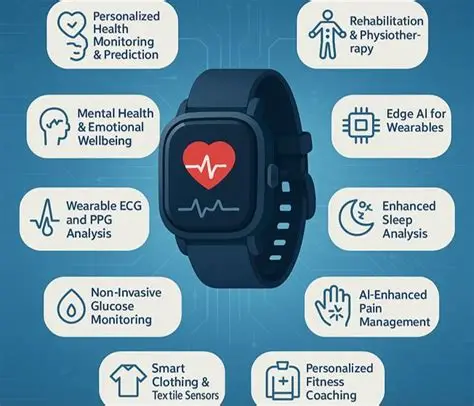
One of the most consequential developments in AI-powered wearables health monitoring is the rise of Edge AI — artificial intelligence that processes data directly on the device rather than shipping it to a remote cloud server. This matters for two reasons: speed and privacy. When your smartwatch detects an irregular heart rhythm, you do not want to wait 30 seconds for a cloud server to respond. Edge AI delivers that alert in real time, with the added benefit of keeping sensitive biometric data off external servers. Devices like the Apple Watch Series 11 and Oura Ring 4 now operate with on-device neural processors that handle heart rate variability analysis, sleep staging, stress detection, and illness prediction locally. Industry analysts at Grand View Research estimate that the on-device AI segment held over 59% of the wearable AI market share in 2025, a figure expected to grow as chip miniaturization continues to accelerate.
Early Detection of Heart Conditions and Silent Arrhythmias
Atrial fibrillation affects approximately 59 million people globally, yet a significant proportion of cases go undetected because the condition is episodic and often silent between episodes. This is precisely where AI-powered wearables health monitoring demonstrates perhaps its most compelling clinical value. Studies evaluating devices including the Apple Watch, Samsung Galaxy Watch, and KardiaMobile have shown sensitivity rates for AF detection ranging from 83% to 100% in supervised settings — numbers that rival traditional spot-check ECG methods. A systematic review published in 2026 confirmed that wearable ECG devices demonstrate high diagnostic performance for both atrial fibrillation and ST-segment abnormalities, with algorithm improvements progressively reducing the rate of inconclusive recordings. The clinical implications are enormous: catching AF before a stroke occurs could prevent one of the most devastating and costly cardiac emergencies in medicine. Research published in npj Digital Medicine in early 2026 further demonstrated that an AI-derived ECG age gap — the difference between a person’s predicted cardiac age and chronological age — is a statistically significant independent predictor of AF burden, opening a new frontier for risk stratification using consumer wearables.
“By revealing where cardiac risk resides before symptoms emerge, wearable AI is transforming atrial fibrillation from a condition we catch during a crisis into one we monitor and manage continuously.” — npj Cardiovascular Health, 2025
Challenges, Opportunities, and the Future of AI-Powered Wearables Health Monitoring
Despite the remarkable clinical advances, the road to mainstream healthcare integration is neither straight nor obstacle-free. The technology is maturing fast, but the systems around it — clinical workflows, regulatory frameworks, reimbursement models, and data governance structures — are playing catch-up. Understanding where these friction points lie is essential for anyone navigating this space, whether as a patient, a clinician, or a healthcare investor.
Data Privacy, Security, and the Trust Problem
Wearable devices generate an extraordinary volume of deeply personal health data — and that data is enormously valuable, which makes it a target. Ransomware and AI-enabled social engineering have become two of the most persistent threats to healthcare organizations in 2026, and connected wearables expand the attack surface considerably. Patients are rightfully asking who owns their biometric data, how it is stored, and whether insurers or employers could one day access it. These concerns are not hypothetical. As devices move toward the “Health-as-a-Service” model — where advanced diagnostic features require ongoing subscriptions and cloud connectivity — the privacy calculus becomes more complicated. Regulatory frameworks in several countries are actively reviewing digital health data standards, but they are still catching up with the pace of product launches. For the wearable AI market to fulfill its potential, trust must be earned through transparency, robust encryption, and clear, enforceable patient data rights.
Integration Into Clinical Workflows and EHR Systems
One of the most persistent operational barriers to AI-powered wearables health monitoring is the challenge of getting device-generated data into clinical systems where it can actually influence care decisions. Electronic Health Records were largely designed for episodic clinical encounters — a doctor’s note, a lab result, a prescription. They were not built to absorb a continuous stream of heart rate variability readings, sleep stage data, and stress scores arriving every few minutes from millions of patients. The result is a fragmentation problem: wearable data exists in its own ecosystem, disconnected from the EHR, creating siloes that limit clinical utility. Efforts are underway to solve this, including the broader adoption of FHIR (Fast Healthcare Interoperability Resources) standards, which allow health data from different systems to communicate more fluently. Several health systems are piloting programs where wearable data is reviewed by care teams as part of chronic disease management protocols, but standardization and clinician training remain significant hurdles.
What the Next Wave of Wearables Looks Like
Looking ahead, the trajectory of AI-powered wearables health monitoring points toward devices that are smaller, less visible, and more medically powerful. Needle-free continuous glucose monitoring — something Apple and Samsung signaled progress on in early 2026 — could eliminate one of the most significant pain points in diabetes care while opening metabolic monitoring to the general population. Skin-integrated sensors are moving from research labs into prototype devices, promising monitoring of biomarkers including lactate, cortisol, and hydration levels through the skin without any wearable form factor at all. Mental health is emerging as another major frontier: tools that analyze speech patterns, heart rate variability, and sleep quality to flag early signs of depression and anxiety are advancing rapidly, though regulatory clarity remains pending. The Lancet published a landmark 2026 study drawing on wearable data from more than 135,000 adults, finding that modest increases in daily movement were associated with meaningful reductions in mortality — a real-world validation that population-scale wearable data can generate genuinely actionable public health insights.
“We are entering a new phase — wearables are no longer passive devices. They are becoming intelligent, predictive, and deeply personalized health companions capable of reshaping how populations manage chronic disease.” — Grand View Research / OneDay Advisor, 2026
Frequently Asked Questions
How accurate are AI-powered wearables at detecting atrial fibrillation?
Clinical studies in 2026 show wearable ECG devices achieving sensitivity rates of 83% to 100% for atrial fibrillation detection compared to a 12-lead ECG gold standard. The Apple Watch and Samsung Galaxy Watch have both demonstrated sensitivity of around 85% in real-world patient cohorts. While algorithm limitations and inconclusive readings still exist, AI-powered wearables health monitoring is considered a credible pre-screening tool and an important complement to formal clinical evaluation.
Is the data collected by health wearables private and secure?
This is one of the most important questions in the wearable health space in 2026. Most major device manufacturers use encryption both on-device and in transit. However, concerns remain about subscription-based “Health-as-a-Service” models that require cloud connectivity, and about whether employers or insurers could eventually access this data. Patients should review privacy policies carefully and favor devices that offer on-device AI processing, which keeps sensitive data off external servers entirely.
Can AI-powered wearables replace visits to the doctor?
Not yet — and most experts agree they should not. The role of AI-powered wearables health monitoring is to complement, not replace, clinical care. These devices excel at continuous longitudinal monitoring, early anomaly flagging, and supporting chronic disease management between appointments. They are not designed for diagnosis, and any alert generated by a wearable should be followed up with a qualified healthcare provider. The best outcomes occur when wearable data is integrated into a patient-clinician relationship.
What is Edge AI in wearables and why does it matter?
Edge AI refers to artificial intelligence that runs directly on the wearable device rather than sending data to a cloud server for processing. This allows for real-time analysis and alerts — critical when monitoring heart rhythms or detecting a fall — without the latency or privacy risks of cloud-dependent processing. As of 2026, on-device AI accounts for the majority of the wearable AI market by processing volume, and chip manufacturers are racing to deliver more powerful on-device neural processing in smaller, more energy-efficient packages.
Conclusion
AI-powered wearables health monitoring has crossed a decisive threshold in 2026. What began as consumer fitness novelty has matured into a clinically meaningful, continuously evolving healthcare infrastructure worn on millions of wrists, fingers, and bodies around the world. The market data is compelling, the clinical evidence is growing, and the direction of travel is clear: care is moving out of the clinic and into everyday life. The challenges — data privacy, EHR integration, regulatory clarity — are real, but they are problems of adoption and governance, not fundamental technology failures. For patients, clinicians, and healthcare systems willing to engage thoughtfully with this shift, AI-powered wearables represent one of the most powerful tools available for catching disease earlier, managing chronic conditions more effectively, and ultimately keeping people healthier for longer. The question is no longer whether wearable AI belongs in healthcare — it is how quickly we can build the systems to make it work at scale.