Industry 4.0 Cybersecurity: 10 Essential Trends
Over 75% of smart factories have experienced at least one significant cyber incident in the past two years, making Industry 4.0 cybersecurity the single most urgent priority for manufacturers heading into 2026. As operational technology (OT) networks merge with traditional IT infrastructure, the attack surface expands exponentially—yet most organizations still treat security as an afterthought. Decision-makers face a stark reality: digital transformation without robust cyber defense is a liability, not an advantage. This guide breaks down the 10 essential trends reshaping Industry 4.0 cybersecurity, complete with real-world case studies, actionable implementation steps, and measurable ROI metrics. Whether you lead a global enterprise or a scaling SME, the insights below will arm you with strategies to secure every layer of your connected operations.
Table of Contents
Industry 4.0 Cybersecurity Trends Shaping 2026
Industry 4.0 cybersecurity is evolving faster than most enterprise security teams can adapt. The convergence of information technology and operational technology has created hybrid environments where a single vulnerability in a sensor can cascade into a full production shutdown. According to Deloitte’s 2025 manufacturing outlook, over 80% of manufacturers plan to increase cybersecurity budgets by 2026, signaling a sector-wide acknowledgment of this growing risk.
The trends below represent the most critical shifts security leaders must understand. They span architectural changes, technology-specific defenses, and strategic frameworks that connect security investment directly to business outcomes. Ignoring any one of these creates a gap adversaries are already exploiting.
IT/OT Convergence and Zero Trust Architecture
IT/OT convergence refers to the merging of corporate information systems with industrial control systems (ICS) that manage physical equipment. Historically, OT networks—the systems running programmable logic controllers (PLCs), SCADA platforms, and industrial IoT (IIoT) devices—operated in isolation. That air gap is gone. Today, production data flows directly into cloud dashboards, ERP systems, and analytics platforms.
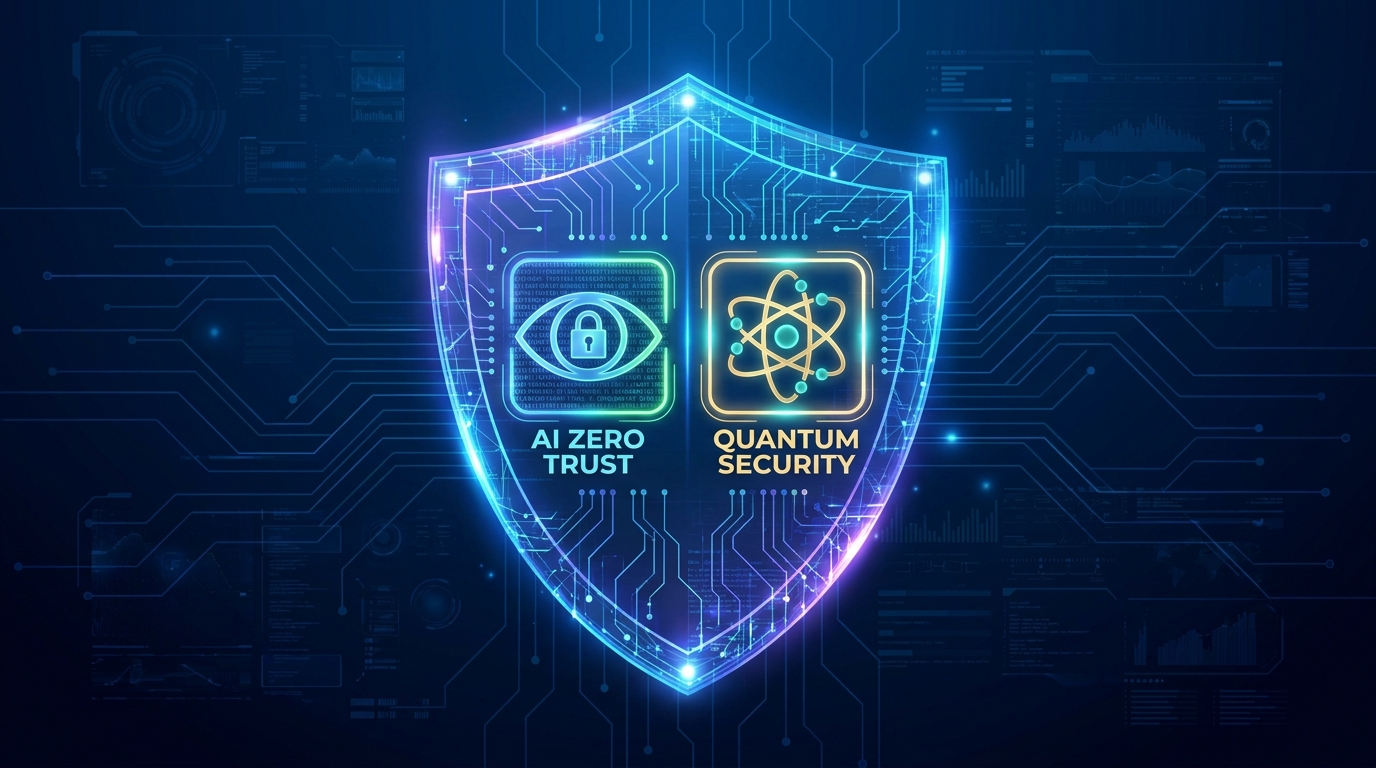
This integration unlocks enormous efficiency gains but introduces severe risk. A compromised IT endpoint can now reach the factory floor. Zero Trust Architecture (ZTA) addresses this by enforcing a “never trust, always verify” principle. Every device, user, and data packet must authenticate before accessing any resource, regardless of network location.
Real-world example: Siemens implemented a zero-trust framework across its Amberg electronics plant in Germany. The facility produces over 15 million units annually. After deployment, the plant reported the following measurable outcomes:
- Unauthorized access attempts dropped by 60% within six months.
- Mean time to detect lateral movement fell from 14 hours to under 90 minutes.
- Compliance audit preparation time decreased by 35%.
For SMEs lacking Siemens-level budgets, cloud-native ZTA solutions from vendors like Zscaler and Palo Alto Networks offer subscription models. These start under $15 per device monthly, making zero trust accessible to mid-market manufacturers running 200–500 IIoT endpoints.
Key implementation steps for IT/OT convergence security include:
- Conduct a full asset inventory of every connected OT device.
- Segment networks using micro-segmentation to contain breaches.
- Deploy identity-aware proxies at every IT/OT boundary.
- Establish continuous monitoring with OT-specific intrusion detection.
Industry 4.0 cybersecurity demands that zero trust is not optional. It is the foundational architecture every connected factory needs before layering additional defenses.
Securing Digital Twin Implementation at Scale
A digital twin is a virtual replica of a physical asset, process, or system. It mirrors real-time conditions using sensor data to simulate performance, predict failures, and optimize output. Digital twin implementation has surged across aerospace, automotive, and pharmaceutical manufacturing. However, each twin represents a live data pipeline—and a potential attack vector.
The security risks of digital twins fall into three categories:
| Risk Category | Description | Potential Impact |
|---|---|---|
| Data Integrity | Manipulated sensor feeds corrupt twin accuracy | Faulty predictions, defective products |
| Unauthorized Access | Attackers view proprietary process simulations | Intellectual property theft |
| API Exploitation | Unsecured APIs between twin and physical asset | Remote manipulation of machinery |
Real-world example: General Electric’s Predix platform powers digital twins for its jet engine manufacturing. In 2024, GE disclosed that a penetration test revealed unsecured REST APIs connecting twins to turbine control systems. Before public exploitation occurred, GE patched the vulnerability and introduced mutual TLS (Transport Layer Security) authentication across all twin-to-asset connections.
Securing digital twin implementation requires encrypting every data stream between the physical asset and its virtual counterpart. Organizations should also apply role-based access controls (RBAC) to limit who can view, modify, or export twin data. According to Forbes’ analysis of 2026 manufacturing trends, digital twins will manage over $30 billion in assets globally. That makes their security posture a board-level concern.
As organizations explore how AI technologies work behind the scenes, applying the same scrutiny to digital twin data pipelines becomes essential for comprehensive Industry 4.0 cybersecurity.
Industry 4.0 Cybersecurity ROI and Strategy
Investing in Industry 4.0 cybersecurity without quantifying the return is a fast track to budget cuts. C-suite leaders increasingly demand clear financial justification before approving security initiatives. The good news: the data overwhelmingly supports proactive investment. IBM’s 2024 Cost of a Data Breach report found that manufacturing breaches averaged $4.73 million per incident—the third-highest across all industries. Preventing even one incident typically covers three to five years of security tooling costs.
Industry 4.0 ROI from cybersecurity materializes in several forms. Reduced downtime, lower insurance premiums, faster regulatory compliance, and preserved brand reputation all contribute directly to the bottom line. The sections below address two of the most impactful strategic trends: supply chain resilience and AI-powered threat detection.

Supply Chain Resilience and SME Adoption
Supply chain attacks target the weakest link in a connected ecosystem. In manufacturing, that often means a small or mid-sized supplier with limited security resources. The SolarWinds and MOVEit incidents proved that attackers exploit vendor relationships to reach high-value targets. For Industry 4.0 environments, this threat intensifies because suppliers now connect directly to production systems via IIoT gateways and shared cloud platforms.
Building supply chain resilience starts with visibility. Organizations need to know exactly which vendors have network access, what data they can reach, and how their own security posture measures up. Vendor risk management platforms like SecurityScorecard and BitSight provide continuous, automated assessments of third-party security health.
Real-world example: Toyota’s 2022 production halt across 14 Japanese factories resulted from a cyberattack on Kojima Industries, a tier-two plastic parts supplier. The incident cost Toyota an estimated 13,000 vehicles in lost production. Following the breach, Toyota mandated cybersecurity baseline standards for all 60,000+ suppliers in its network. Key requirements included:
- Endpoint detection and response (EDR) on all supplier-connected devices.
- Mandatory multi-factor authentication for any production system access.
- Quarterly penetration testing with results shared to Toyota’s security team.
- Encrypted communications for all data exchanged with Toyota’s OT networks.
For SMEs, the cost-benefit analysis of adopting these standards is favorable. A basic EDR solution costs approximately $5–$10 per endpoint monthly. Multi-factor authentication (MFA) solutions like Duo or Microsoft Authenticator are often free for small teams. The alternative—being dropped from a major manufacturer’s approved vendor list—is far more expensive.
Industry 4.0 cybersecurity in the supply chain also aligns with emerging regulations. The EU’s NIS2 Directive, effective October 2024, holds large manufacturers legally responsible for supply chain security. Non-compliance penalties reach up to €10 million or 2% of global turnover. Companies that adopt strong practices now, as platforms increasingly enforce accountability standards across digital ecosystems, position themselves as preferred partners in regulated markets.
AI-Driven Threat Detection in Smart Factories
Smart factories generate massive volumes of data—often terabytes daily from sensors, controllers, and automated systems. Traditional signature-based security tools cannot keep pace. AI-driven threat detection uses machine learning models trained on normal operational patterns to identify anomalies that human analysts would miss.
The distinction between IT-focused AI security and OT-specific AI security is critical. Factory environments have unique communication protocols—Modbus, OPC UA, PROFINET—that standard IT security tools do not understand. Purpose-built OT security platforms from companies like Claroty, Nozomi Networks, and Dragos use AI models specifically trained on industrial protocols.
Real-world example: Schneider Electric deployed Nozomi Networks’ AI-powered anomaly detection across its Le Vaudreuil smart factory in France. Within the first quarter, the system identified previously undetected lateral scanning activity originating from a misconfigured IIoT temperature sensor. The sensor had been communicating with an external IP address for weeks. Manual monitoring had not flagged it because the traffic volume was minimal.
The measurable outcomes of AI-driven detection in Industry 4.0 cybersecurity include:
| Metric | Before AI Deployment | After AI Deployment |
|---|---|---|
| Mean Time to Detect (MTTD) | 18 days | 4.2 hours |
| False Positive Rate | 62% | 11% |
| Incidents Requiring Manual Triage | 340/month | 85/month |
| Annual Security Staffing Cost Savings | Baseline | $220,000 reduction |
These numbers illustrate the Industry 4.0 ROI of AI security investments. Reduced false positives alone free security analysts to focus on genuine threats rather than chasing benign alerts. As Forbes Tech Council notes, embodied AI will increasingly integrate with physical automation, expanding the need for intelligent, protocol-aware monitoring.
Implementation guidance for AI threat detection in smart factories:
- Start with a 30-day passive monitoring phase to establish baseline behavior.
- Integrate AI detection with existing SIEM (Security Information and Event Management) systems.
- Assign dedicated OT security analysts to review AI-flagged anomalies initially.
- Retrain models quarterly as production processes and device configurations evolve.
Emerging trends in automation security also intersect with how AI transforms operational workflows, from ticketing to threat response orchestration. The factories that integrate these capabilities first will gain a defensible competitive advantage in data protection and operational uptime.
Frequently Asked Questions
What is Industry 4.0 cybersecurity and why does it matter?
Industry 4.0 cybersecurity refers to the strategies, tools, and frameworks that protect connected manufacturing environments. It matters because smart factories rely on IIoT devices, cloud platforms, and automated systems that create new attack surfaces. A single breach can halt production lines, expose proprietary data, and cost millions in downtime and regulatory fines.
How does IT/OT convergence increase security risk?
IT/OT convergence eliminates the traditional air gap between corporate networks and industrial control systems. Attackers who breach an IT endpoint—such as an email server—can now pivot into OT systems controlling physical machinery. This lateral movement capability means a phishing email can ultimately disrupt a production line or damage equipment.
What is zero trust architecture for manufacturing?
Zero Trust Architecture in manufacturing requires every user, device, and data packet to verify identity before accessing any resource. Unlike perimeter-based security, zero trust assumes the network is already compromised. It uses micro-segmentation, continuous authentication, and least-privilege access to contain threats and prevent lateral movement across factory networks.
How can SMEs afford Industry 4.0 cybersecurity solutions?
SMEs can adopt cloud-native security platforms with subscription pricing, often starting under $15 per device monthly. Free or low-cost tools like Microsoft Authenticator for MFA and open-source EDR solutions lower the entry barrier significantly. Government grants and industry consortium programs in the EU and US also subsidize cybersecurity adoption for smaller manufacturers.
What ROI can manufacturers expect from cybersecurity investments?
Manufacturers typically see ROI through avoided breach costs, reduced downtime, lower insurance premiums, and faster compliance. IBM reports the average manufacturing breach costs $4.73 million. A comprehensive cybersecurity program costing $200,000–$500,000 annually can prevent incidents that would otherwise dwarf that investment within a single occurrence.
How does AI improve threat detection in smart factories?
AI analyzes massive data volumes from IIoT sensors and controllers to detect anomalies invisible to human analysts. It understands industrial protocols like Modbus and OPC UA, reducing false positives significantly. Factories deploying AI detection report mean-time-to-detect improvements from days to hours, freeing security teams to focus on genuine, high-priority threats.
Are digital twins a cybersecurity risk?
Yes. Digital twins maintain live data connections to physical assets, creating potential attack vectors. Compromised twins can feed faulty simulation data, expose intellectual property, or enable remote manipulation of connected machinery. Securing twins requires encrypted data streams, mutual TLS authentication, and strict role-based access controls on all twin platforms.
Conclusion
The 10 essential trends in Industry 4.0 cybersecurity share a common thread: security must be embedded into every layer of digital transformation, not bolted on afterward. From zero trust architecture and digital twin protection to AI-driven threat detection and supply chain resilience, each trend demands proactive investment and measurable accountability. The manufacturers who act now will protect their operations, unlock sustainable ROI, and earn the trust of partners and regulators alike.
Do not wait for a breach to justify your next security initiative. Share this guide with your leadership team, assess which trends your organization has yet to address, and begin building your 2026 cybersecurity roadmap today. For more insights on how technology reshapes critical operations, explore our guide on AI-powered workflow transformation.